 Seasonal Tips
Why You Shouldn't Cut Everything Down This Fall

Vice President & Owner, Schlegel Greenhouse · October 30, 2026
Some of the most useful things in your garden this winter are the plants that have already finished growing.
By the end of October, many Indiana gardens have lost their color. Frost has browned the hostas, coneflowers have gone to seed, and ornamental grasses have begun to dry.
It’s tempting to cut everything to the ground and start fresh in spring.
But an immaculate fall cleanup isn’t necessarily the best thing for your garden.
Many of the stems, seed heads, and fallen leaves we consider debris serve important purposes through winter. The trick is knowing what to leave and what to remove.
Leave the Plants That Still Have Something to Offer
Coneflowers and black-eyed Susans are excellent candidates for leaving standing.
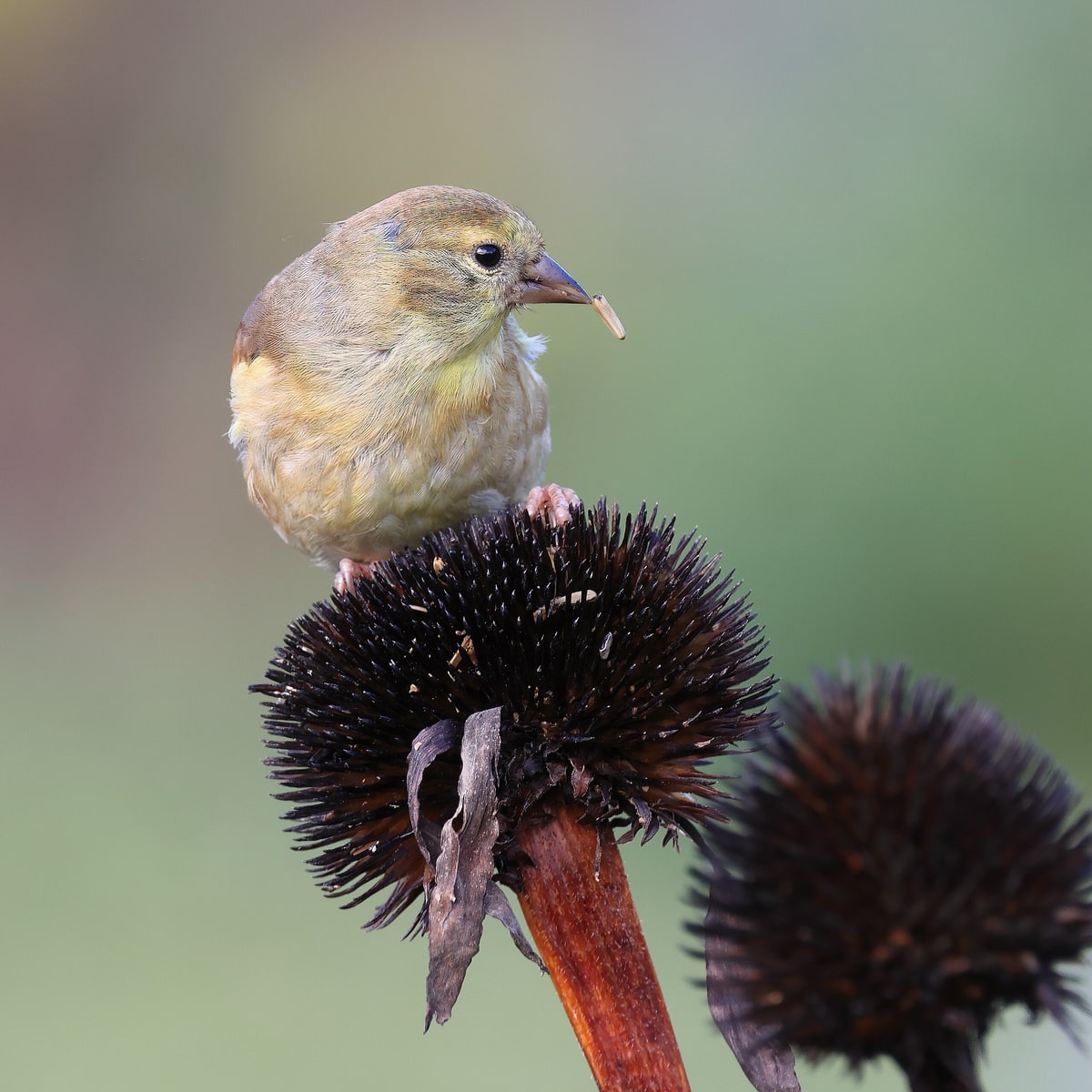
Their dried seed heads can provide food for goldfinches and other birds. Even after the seeds are gone, the stems contribute structure to the winter landscape.
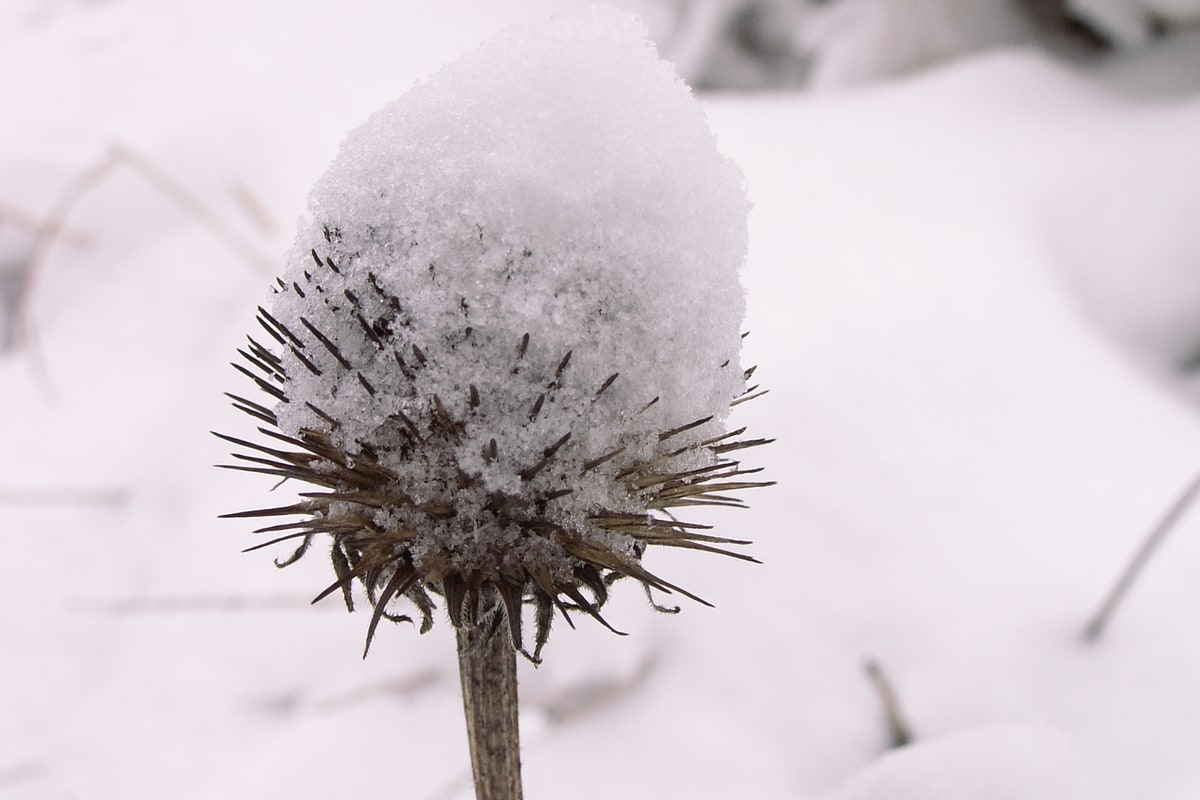
A coneflower seed head after a January snow. Photo: Cbaile19, via Wikimedia Commons, CC0.
Ornamental grasses are another good example. Their dried foliage can look beautiful in snow, and standing growth provides shelter around the base of the plant.
Joe-Pye weed, asters, goldenrod, and many other perennials can also remain standing through winter.
According to the Xerces Society, some native insects spend winter in plant debris, while others use hollow or pithy stems as nesting sites.
Those old stems are not necessarily empty.
For gardeners interested in supporting wildlife, cutting every perennial to the ground removes resources that may otherwise remain available through winter and into the following growing season.
Know When Cleanup Is Worthwhile
Leaving plants standing doesn’t mean ignoring disease.
If your bee balm or garden phlox suffered a severe powdery mildew infection, removing infected foliage can help reduce disease pressure.
Peonies with diseased leaves also benefit from sanitation.
The same goes for plants with significant pest problems or those that spread aggressively from seed.
Purdue Extension recommends a balanced approach: leave healthy plant material where it provides benefits, but remove diseased debris when appropriate.
A completely hands-off garden isn’t always the answer. Neither is a completely cleared one.
What About the Leaves?
Fallen leaves are valuable winter habitat.
Butterfly and moth life stages, beetles, and numerous other small animals may shelter in leaf litter or the soil beneath it.
In garden beds, leaves also help moderate soil temperatures and contribute organic matter as they break down.
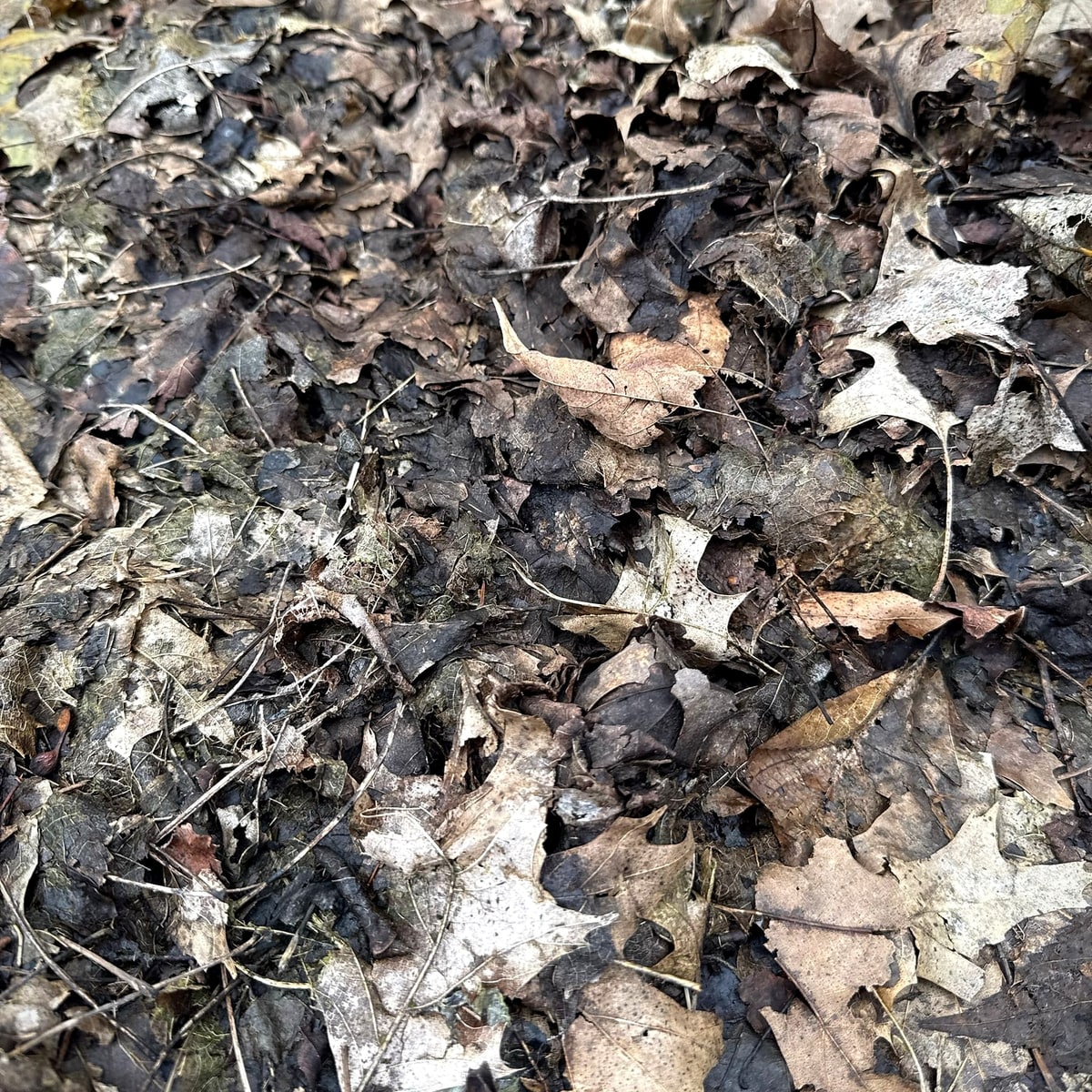
Oak and maple leaves left along a bed edge, already starting to break down. Photo: Caleb Schlegel.
But thick mats of leaves can smother a lawn.
A practical approach is to remove excess leaves from grass while preserving some whole leaves in perennial beds, beneath shrubs, or in less formal parts of the yard.
If insect habitat is your priority, moving leaves intact is better than shredding them.
You don’t have to leave every leaf exactly where it fell.
A Garden Doesn’t Have to Look Abandoned
There’s a difference between a neglected garden and one that has been thoughtfully prepared for winter.
Keep paths clear. Remove diseased plants. Tidy the areas closest to entrances and walkways.
Then allow some healthy stems, grasses, seed heads, and leaves to remain.
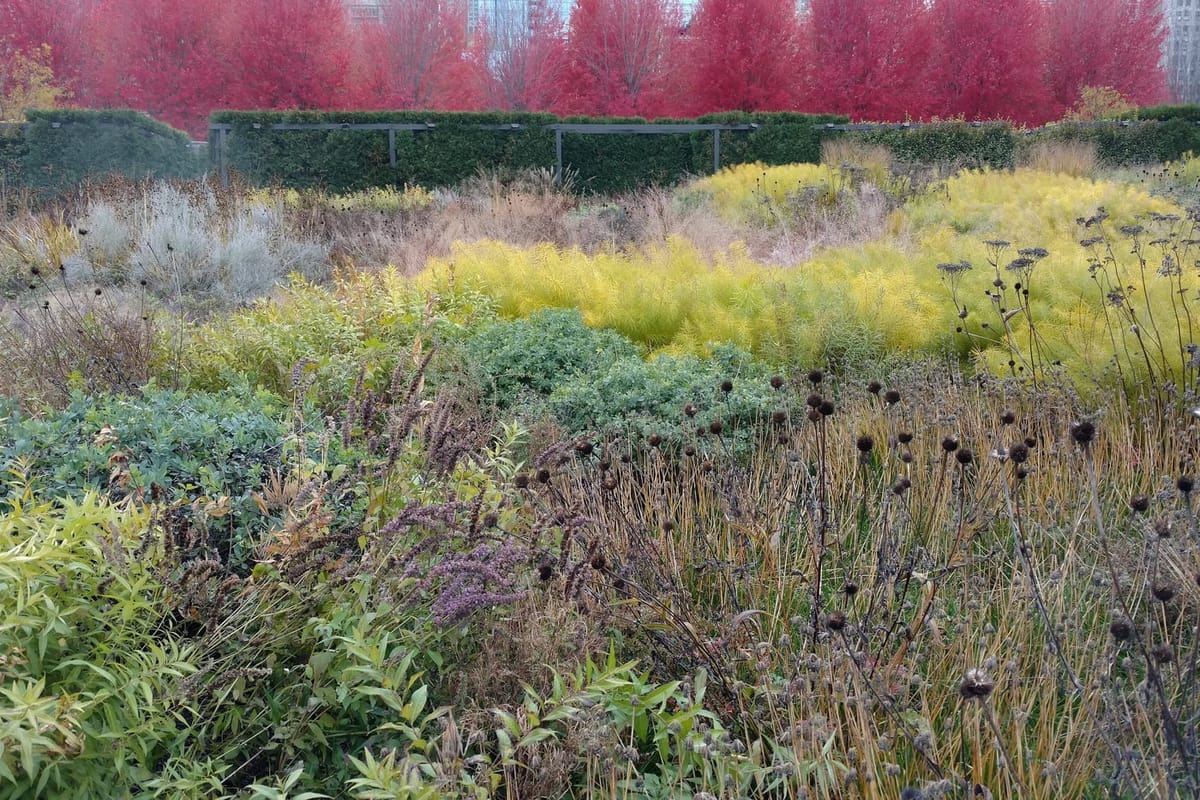
Standing seed heads and grasses in the Lurie Garden, Chicago, in early November. Photo: NewtonCourt, via Wikimedia Commons, CC BY-SA 4.0, cropped.
You may find that a garden can look intentional without looking freshly cut.
And when spring arrives, you’ll have more than new growth to look forward to.
Some of the life in your garden may have been there all winter.
Hoosier Tip
Leave ornamental grasses standing until late winter, then cut them back before the new green shoots appear at the base. Wait too long and you end up trimming the tips off the new leaves along with the old ones.
Further reading
Purdue Extension: 5 things to avoid this fall when putting your garden to bed
Xerces Society: Leave the Leaves, winter habitat protection
Top photo: an American goldfinch feeding on purple coneflower seeds. Photo: Cephas, via Wikimedia Commons, CC BY-SA 4.0, cropped.
More on seasonal tips, every Friday
Three growing guides like this one and a short note from the greenhouse, free, once a week. Written for Indiana gardens.
Reference: Purdue Extension, 5 things to avoid this fall when putting your garden to bed (Sept. 19, 2025); Xerces Society, Leave the Leaves: Winter Habitat Protection; Xerces Society, Leave the Leaves! (Sept. 17, 2026).