 Seasonal Tips
Why Does Ornamental Kale Look Better in Cold Weather?

Sales Director & Design Expert · November 13, 2026
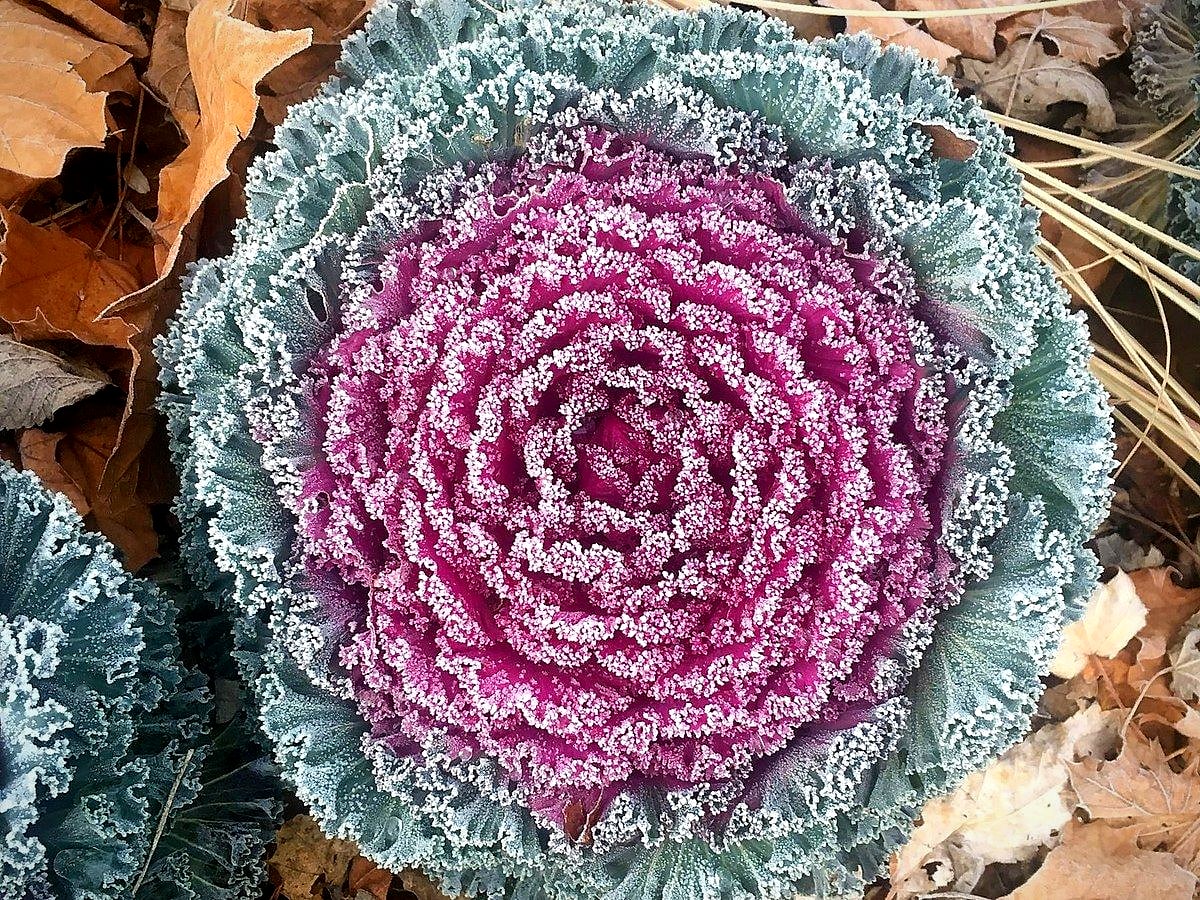
Ornamental kale and cabbage bring color to the garden as the weather cools. Their pink, purple and cream centers become more noticeable after a stretch of cool nights.
How the color comes in
Mostly green leaves
↓
Several nights below about 50°F
↓
Green chlorophyll fades
↓
Pink, purple, red or cream shows through
↓
Full color in two to four weeks
Why the color shows up late
In warm weather, green chlorophyll masks the colors in the center of the plant. After several nights below about 50°F, the leaves lose chlorophyll and those colors become visible.
UMass Extension says full color takes two to four weeks of cool nights. A plant that looks mostly green at a garden center in September may look its best in mid-November.
How much cold they can take
Ornamental kale and cabbage belong to the same species as cabbage and broccoli grown for eating. They also share that tolerance for cold.
NC State Extension and University of Wisconsin Extension list them as hardy to about 5°F once they have adjusted to cooler weather. A frosty morning does not harm these adjusted plants, and they often stay attractive into December.
Kale or cabbage?
Ornamental kale and cabbage are the same species. Their leaf shapes are the main difference.
| Feature | Ornamental kale | Ornamental cabbage |
|---|---|---|
| Leaves | Deeply cut, frilly or fringed | Broad and flat, often with contrasting edges |
| Size | About 12 inches wide and 15 inches tall | About 12 inches wide and 15 inches tall |
| Cold tolerance | About 5°F after adjusting to cool weather | About 5°F after adjusting to cool weather |
| Grown for | Colorful leaves | Colorful leaves |
The word “flowering” on a label refers to the colored center, not actual blooms.
Getting the most out of them
- ✓ Choose the size and color you want. Buy plants that are nearly colored. They will not grow much after planting, especially if their roots are crowded in the pot.
- ✓ Plant a little deep. Bury the stem so the lowest leaves sit at the soil surface.
- ✓ Provide sun and water. Plant in full sun and keep the soil moist until the ground freezes.
- ✓ Stop fertilizing when nights turn cool. Extra nitrogen during the coloring weeks can keep leaves from coloring well.
- ✓ Pair with pansies. In a container, place one kale or cabbage in the center and surround it with pansies.
What happens in spring
These plants are biennials, meaning their life cycle spans two growing seasons, but they are usually grown for one season. Plants that survive winter produce small yellow flowers in spring, stretching out their compact shape. Most gardeners remove them in spring and plant fresh ones the following fall.
The leaves are edible but more bitter than kitchen kale. They turn gray when cooked and are generally used as a garnish.
Hoosier Tip
Remove yellowed lower leaves as the season progresses to keep the plant looking tidy.
More on seasonal tips, every Friday
Three growing guides like this one and a short note from the greenhouse, free, once a week. Written for Indiana gardens.
Reference: UMass Extension, “Flowering Cabbage and Kale”; NC State Extension Gardener Plant Toolbox, “Brassica oleracea (Ornamental Kale Group)”; University of Wisconsin–Madison Extension, “Ornamental Cabbage and Kale.”