 Plant Selection
The Invasive Plants We Invited Into Indiana

Vice President & Owner, Schlegel Greenhouse · October 23, 2026
Some of Indiana’s most troublesome plants started as perfectly ordinary landscape choices.
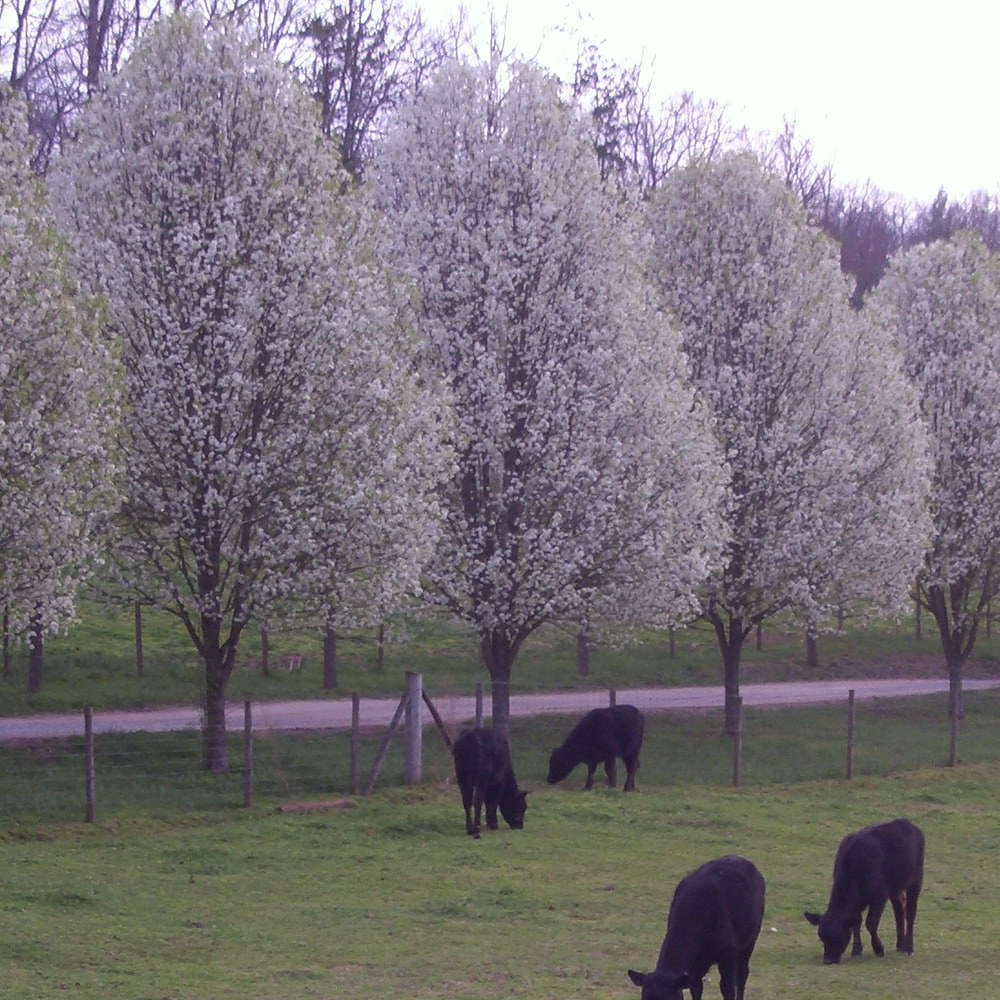
Every spring, before most of our trees have begun to leaf out, you’ll see clusters of white flowers appearing along Indiana’s highways.
In some places, there are so many flowering trees that entire roadsides look white.
Many of them are Callery pears, descendants of trees that were deliberately planted because people thought they were ideal for landscaping.
The Bradford pear was once one of the most popular ornamental trees in the country. It grew quickly, produced attractive spring flowers, tolerated challenging urban conditions, and had a predictable shape.
For years, those qualities made it an easy recommendation.
Unfortunately, it also became one of our clearest examples of a plant escaping cultivation and changing the landscape around it.
What went wrong with Bradford pears?
Early Bradford pears were often promoted as relatively safe from unwanted seed production because trees of the same cultivar generally couldn’t fertilize one another.
But as additional Callery pear cultivars became available, cross-pollination made viable seed production possible.
Birds ate the small fruit and carried seeds away from the landscaped properties where the trees were planted.
The resulting seedlings were often very different from the carefully selected trees people purchased. They could be thorny, vigorous, and capable of forming dense stands.
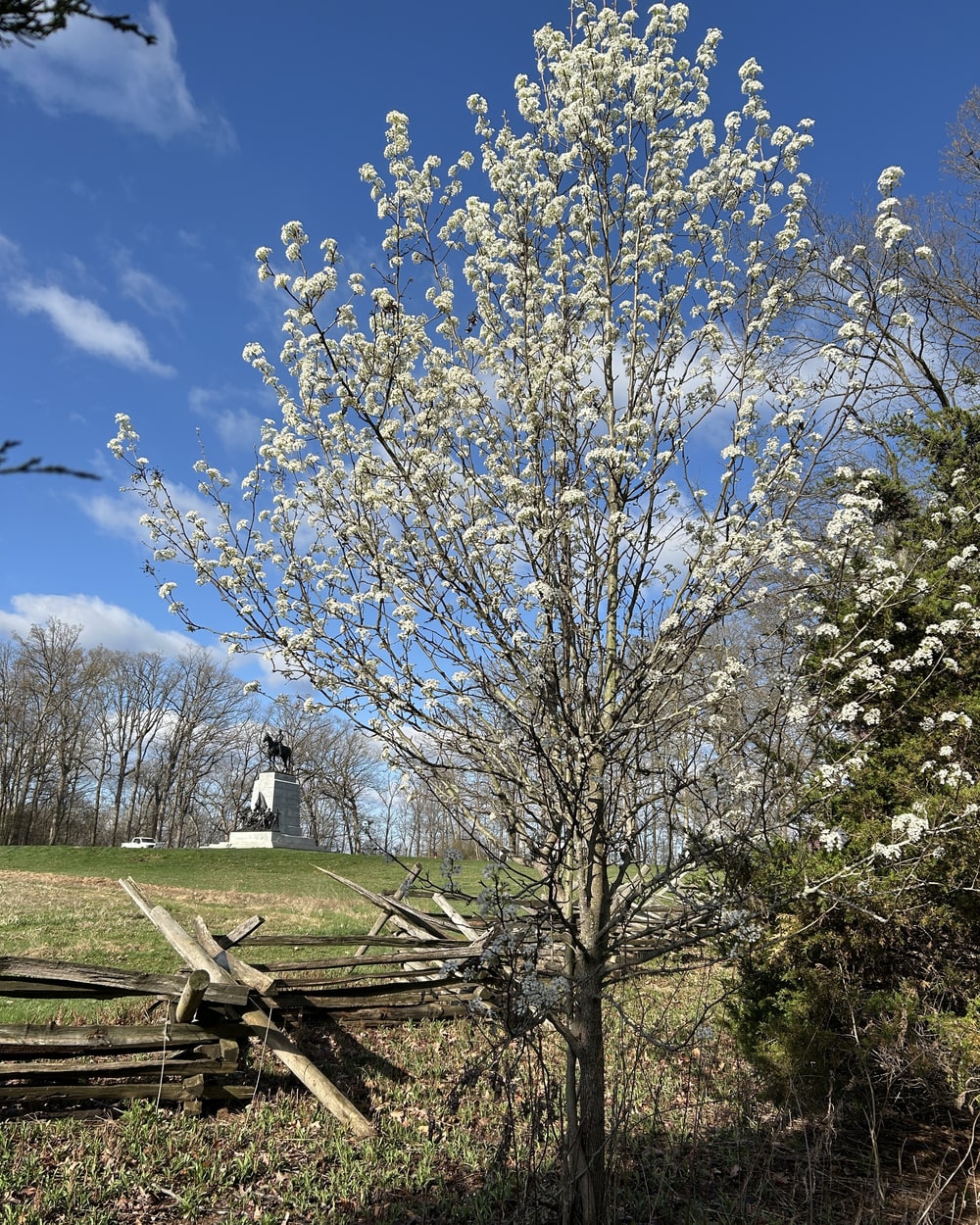
A volunteer Callery pear on a fence line at Gettysburg National Military Park, where birds perching on the rails drop the seeds. Photo: National Park Service.
Visit an abandoned field or roadside in central Indiana during spring and you can see the results.
The problem isn’t simply that we have more pear trees. Dense stands can interfere with the establishment of other trees, shrubs, and herbaceous plants.
And because these trees spread well beyond their original planting sites, maintaining the landscaped Bradford pear doesn’t solve the larger problem.
Burning bush
Another familiar example is burning bush, Euonymus alatus.
It’s easy to understand why this shrub became popular. During fall, the foliage can turn an exceptionally bright red.
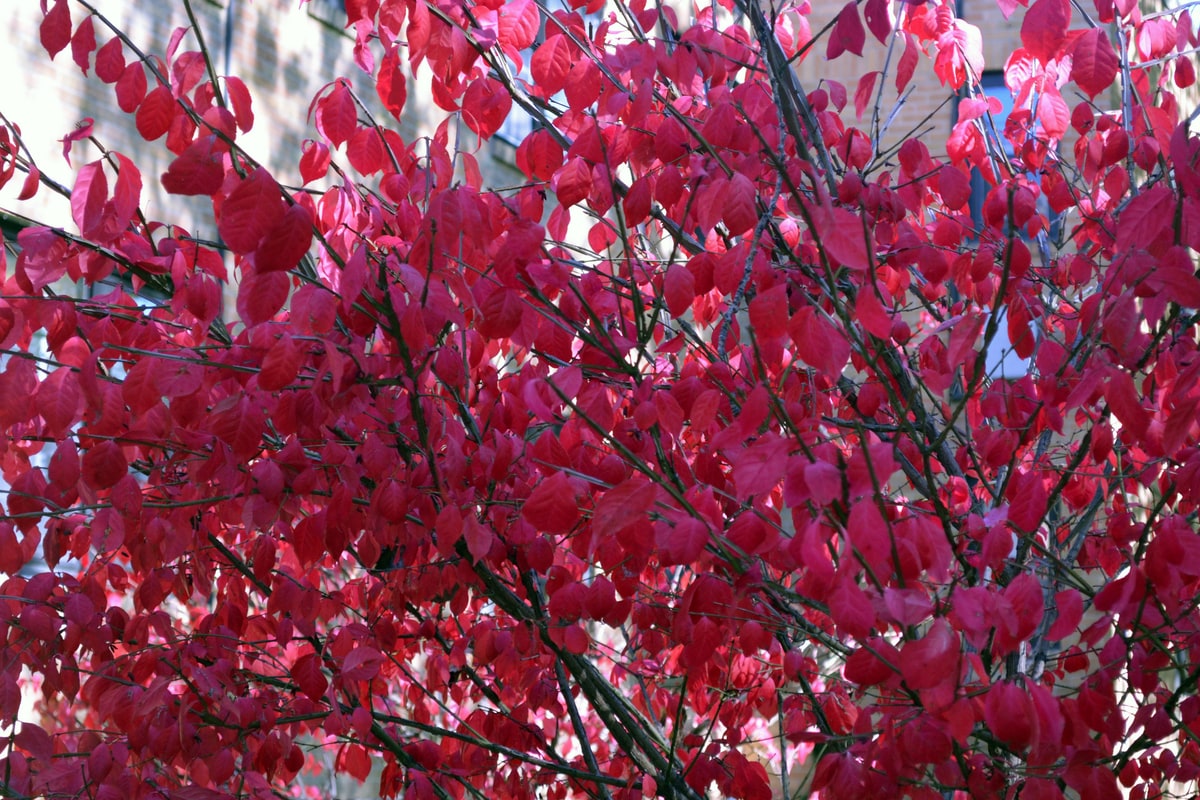
Burning bush in October color. Photo: Joanna Gilkeson, U.S. Fish and Wildlife Service (public domain).
For decades it was a standard choice for residential and commercial landscapes.
But burning bush produces fruit that birds can disperse into nearby natural areas. Seedlings can establish in wooded environments, where they compete with native shrubs and understory vegetation.
The shrub may look perfectly manageable in somebody’s front yard while its offspring are growing elsewhere.
That’s one of the difficulties with evaluating invasive plants from the perspective of an individual garden.
The effects may not be obvious where the original plant is growing.
Bush honeysuckle
If you spend much time walking through Indiana woodlands, you’ve probably encountered invasive bush honeysuckle.
Several introduced species have become established, including Amur honeysuckle, Lonicera maackii.
These shrubs have a competitive advantage that becomes especially apparent in spring and fall.
They often leaf out earlier than many native woodland plants and hold their leaves later into autumn.
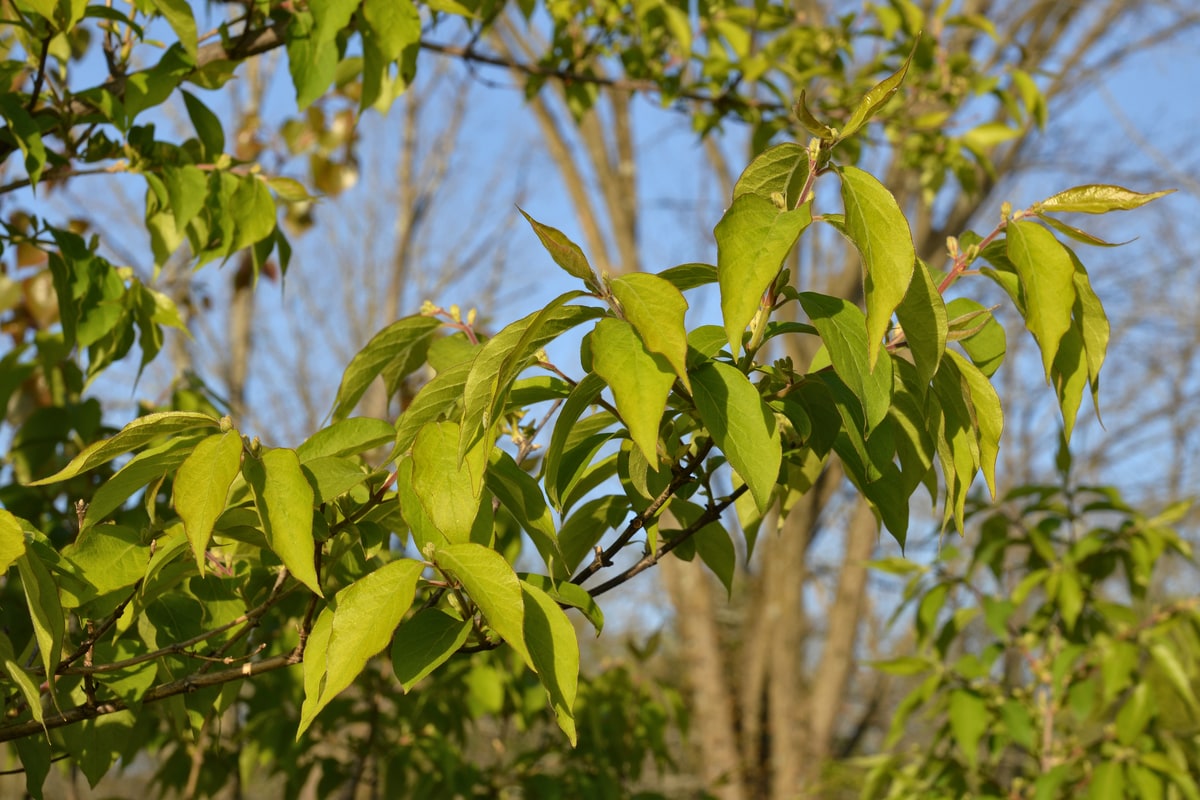
Amur honeysuckle fully leafed out in April while the trees behind it are still bare. Photo: Ryan Hodnett, via Wikimedia Commons, CC BY-SA 4.0, cropped.
That gives them an extended period to capture sunlight.
Over time, dense stands can shade the forest floor and reduce the light available to native wildflowers, young trees, and other understory vegetation.
A woodland filled with honeysuckle may still look green and healthy from a distance, but the composition of the plant community underneath can be substantially different.
Wintercreeper and Japanese stiltgrass
Not all invasive plants are trees or shrubs.
Wintercreeper, Euonymus fortunei, was commonly planted as an evergreen groundcover.
It can spread across wooded ground and climb trees, competing with native vegetation. Its persistence and ability to cover difficult areas are precisely what made it attractive as a landscape plant.
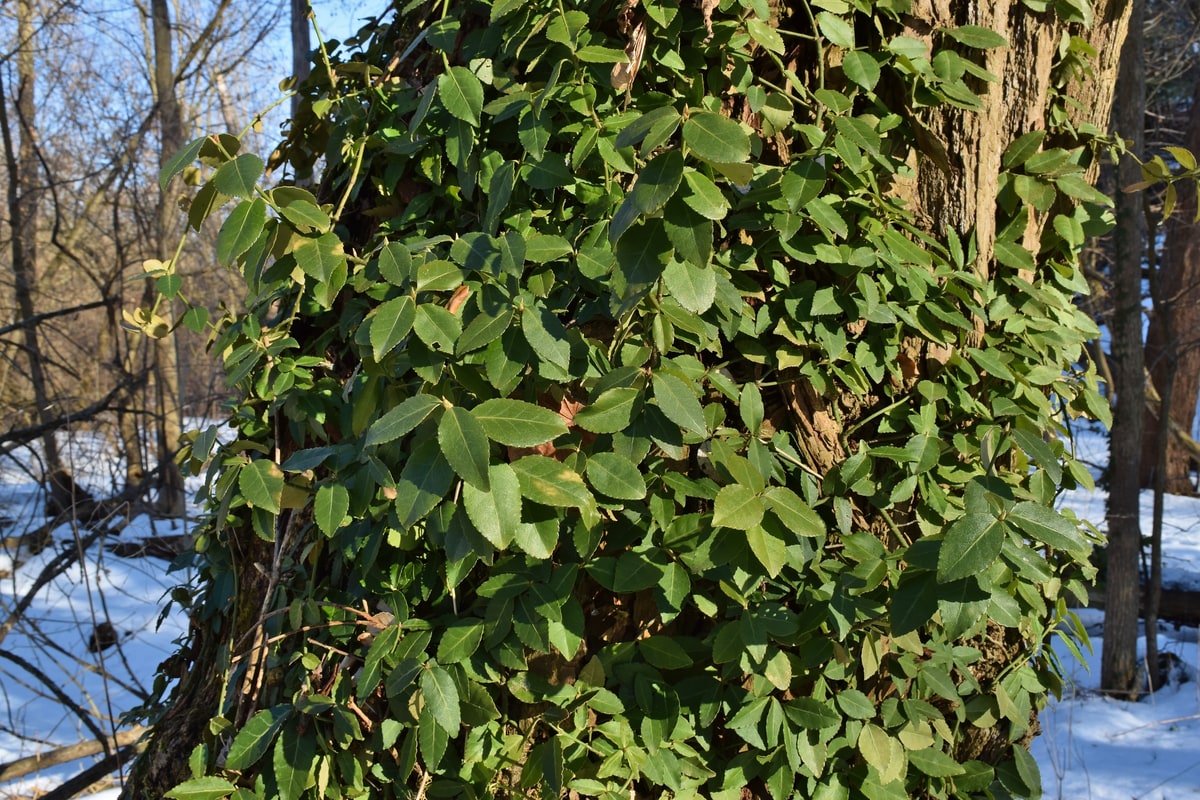
Wintercreeper climbing a tree trunk, still green in March. Photo: The Cosmonaut, via Wikimedia Commons, CC BY-SA 2.5 CA, cropped.
Japanese stiltgrass, Microstegium vimineum, is another problem, particularly in disturbed woodland environments.
It’s an annual grass that produces seed capable of spreading through trails, equipment, moving water, and other disturbances.
Once established, it can form dense patches that limit the growth of other plants.
Neither of these is simply a case of a plant growing a little too vigorously in somebody’s flower bed.
They can change which species are able to establish in natural ecosystems.
What about the plants we grow?
This is where the discussion gets more complicated for someone working in horticulture.
We grow plants from all over the world, and many have been selected specifically because they’re vigorous and adaptable.
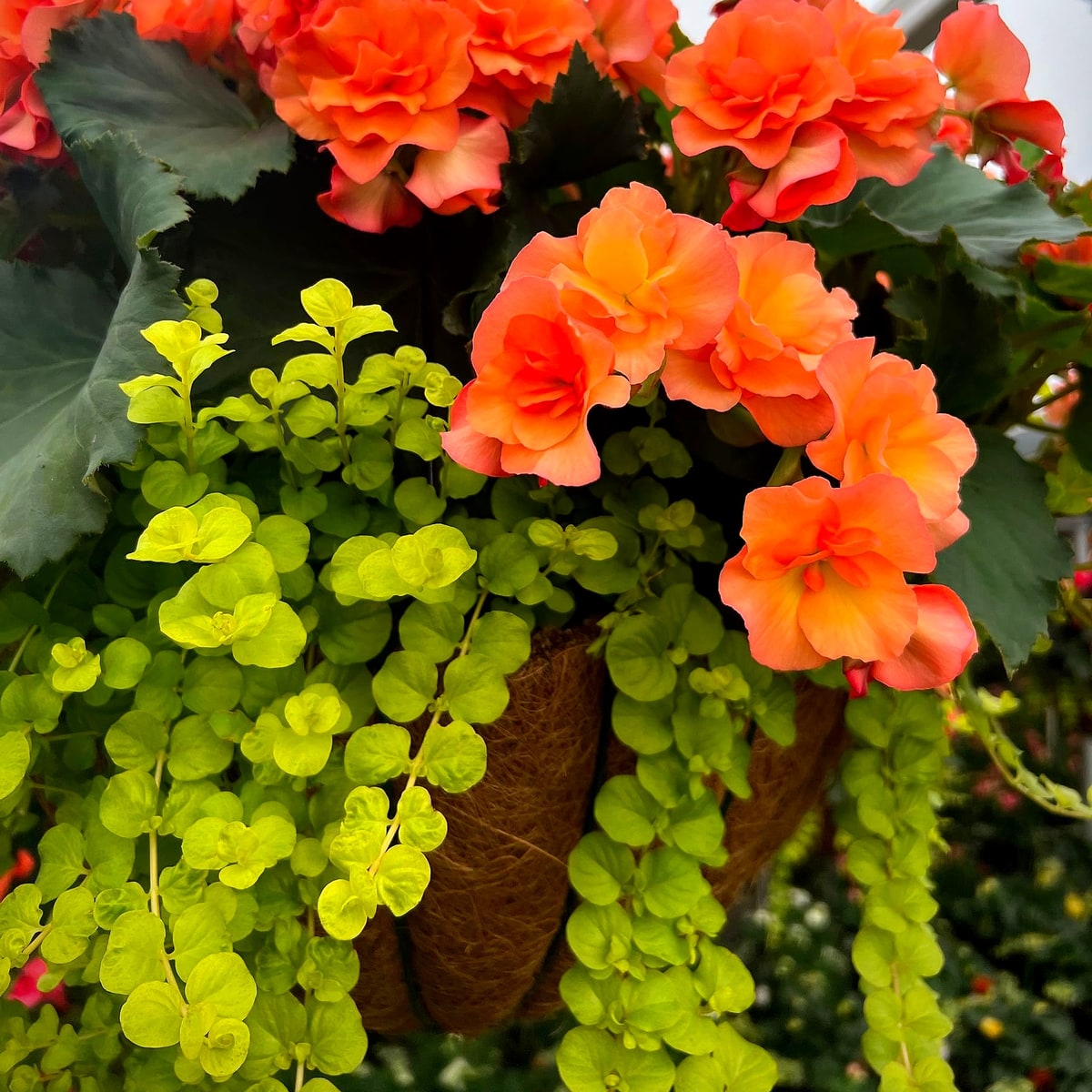
Creeping Jenny, Lysimachia nummularia, is a good example. Its trailing stems and bright foliage make it useful in containers and hanging baskets.
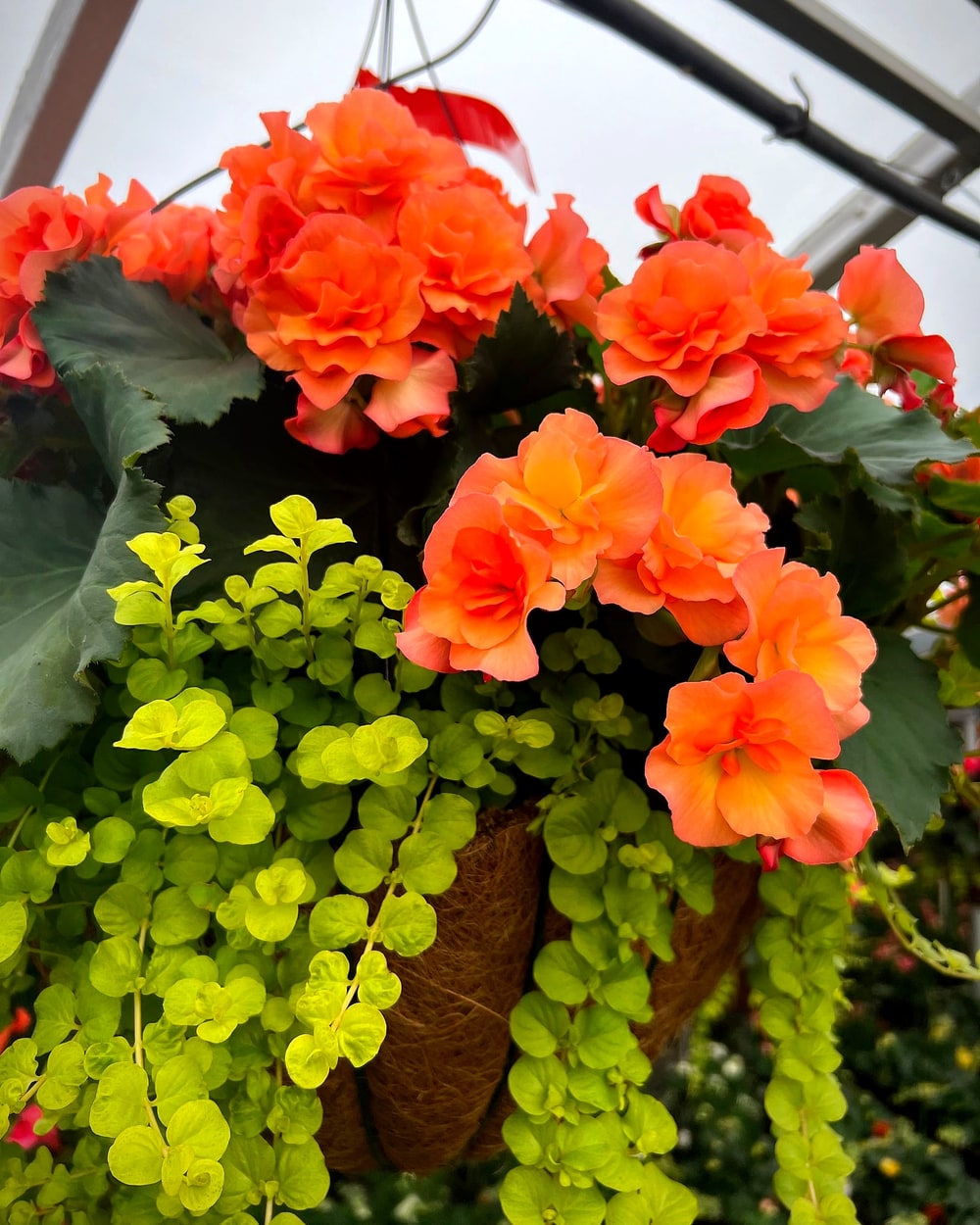
Creeping Jenny trailing from a begonia basket in the greenhouse. Photo: Caleb Schlegel.
Ground ivy, Glechoma hederacea, is another. Ornamental forms can provide attractive trailing foliage.
But both species can spread beyond their intended growing area.
Neither is among the 44 species currently prohibited under Indiana’s statewide Terrestrial Plant Rule, although Bloomington includes both on its list of plants prohibited in regulated landscape installations.
The Indiana Invasive Species Council, which advises the state, does list both as invasive, ranking creeping Jenny (listed as moneywort) high and ground ivy (listed as creeping Charlie) medium.
That distinction is important.
A plant being legally available somewhere doesn’t necessarily mean it’s appropriate for every situation.
And a plant’s ornamental value doesn’t eliminate its ability to spread.
I think growers and gardeners both benefit from being willing to acknowledge that.
What has changed in Indiana?
Indiana has become more deliberate about regulating invasive plants.
In 2019, the state adopted its Terrestrial Plant Rule, identifying 44 invasive species. For plants already in commercial trade, the prohibition on sale and distribution took effect in April 2020.
The list includes species such as Japanese barberry, wintercreeper, invasive bush honeysuckles, Japanese stiltgrass, and tree-of-heaven.
But not every plant considered invasive is on that list.
Callery pear and burning bush, for example, aren’t included in the current statewide 44-species rule, even though both are recognized as serious problems by invasive-plant specialists.
Both have been proposed for the state list, along with creeping Jenny (listed as moneywort) and several other species, but no change has been adopted as of fall 2026.
Local communities may establish additional restrictions for landscaping, as Bloomington has done.
That creates a situation in which a plant’s legal status and its ecological risk are not always the same thing.
It also means gardeners should look beyond whether a plant is still available at a store.
What can gardeners do?
I don’t think every garden needs to consist entirely of native plants.
There are many nonnative ornamental species that behave responsibly in Indiana gardens and provide years of enjoyment.
The important thing is knowing which plants have a demonstrated history of spreading into natural areas and causing harm.
If you’re replacing a Bradford pear, consider a serviceberry or eastern redbud, depending on the site.
If you’re removing invasive honeysuckle or burning bush, there are native shrubs that can provide flowers, fruit, fall color, and habitat value.
And if you’re growing a plant known to spread aggressively, understand how it reproduces and whether it can escape from the situation where you’re using it. A container doesn’t automatically prevent spread, especially if stems can root outside the pot or if the plant produces viable seeds.
One final consideration is how we dispose of unwanted plants. Dumping garden debris into woods, vacant land, or drainage areas can introduce plants into places where they’re difficult to control.
The original landscape designers who planted Bradford pears probably weren’t thinking about what Indiana roadsides would look like fifty years later.
But their decisions are still visible.
What we choose to plant today may be just as consequential.
Hoosier Tip
Before you buy a new tree, shrub or groundcover, look it up on the Indiana Invasive Species Council’s plant list, not just the state’s prohibited list. Callery pear, burning bush and creeping Jenny (listed there as moneywort) all carry the council’s High ranking, even though none of them is prohibited statewide.
Top photo: a planted row of Bradford pears in bloom along Wolf Creek Road in Mineral Bluff, Georgia. Photo: jwshaw, via Wikimedia Commons, CC BY-SA 3.0, cropped and color-corrected.
More on plant selection, every Friday
Three growing guides like this one and a short note from the greenhouse, free, once a week. Written for Indiana gardens.
Reference: Indiana DNR, Terrestrial Invasive Plants; Indiana Administrative Code, 312 IAC 18-3-25, Prohibited invasive terrestrial plants; Indiana Invasive Species Council, Invasive Plant List; City of Bloomington Unified Development Ordinance, 20.04.080, Table 04-18 Prohibited Plant Species; City of Bloomington, Prohibited Plant Species (2022); WFIU, More plants proposed for list of state-banned invasive species (July 14, 2025); Indiana Native Plant Society, Updates on amendment to Terrestrial Invasive Plant Rule (2024); Purdue Forestry and Natural Resources, Invasive Bradford (Callery) Pear; Purdue Extension ID-464-W, alternatives to invasive landscape plants; National Park Service, Callery Pear at Gettysburg.