 Plant Selection
Four New Spillers We're Trying Next Spring

Owner, Schlegel Greenhouse · September 25, 2026
Some of the plants that make a mixed container work aren’t really there for the flowers at all.
When people build mixed containers, flowers usually get most of the attention.
But there’s another group doing the quiet work: the plants that creep through the middle, soften the edge and eventually trail down the side of the pot.
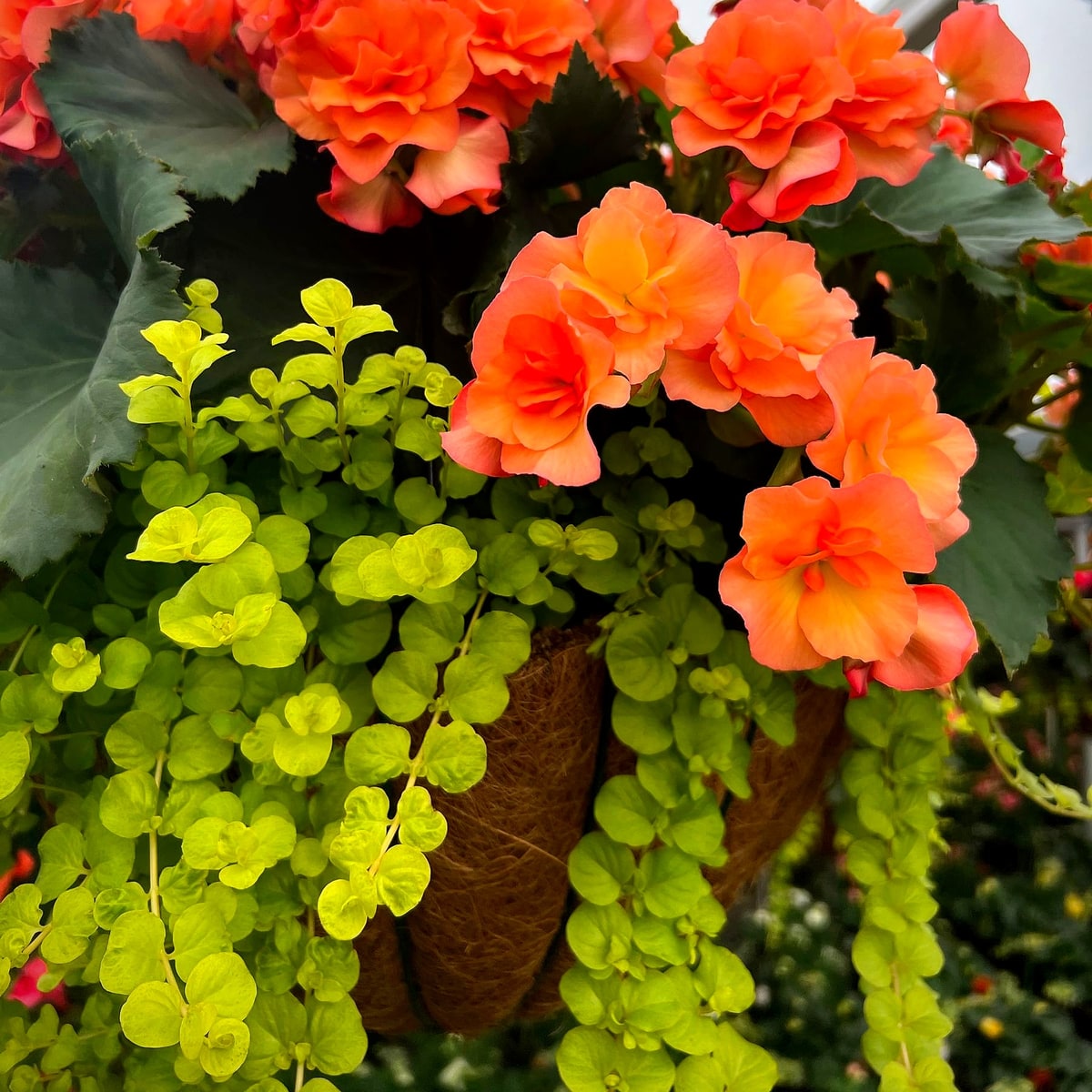
Golden creeping Jenny, in the photo above, is the one most gardeners already know — and it’s the plant all four of these new ones end up getting compared to.
We call them components or spillers, and we’re adding several interesting ones to our program for next spring.
The interesting part is how different these four are.
Lysimachia ‘Midnight Sun’
If you’ve used creeping Jenny in a planter, you already understand what Lysimachia can do.
But Midnight Sun takes that familiar trailing habit and gives it almost black, plum-colored foliage.
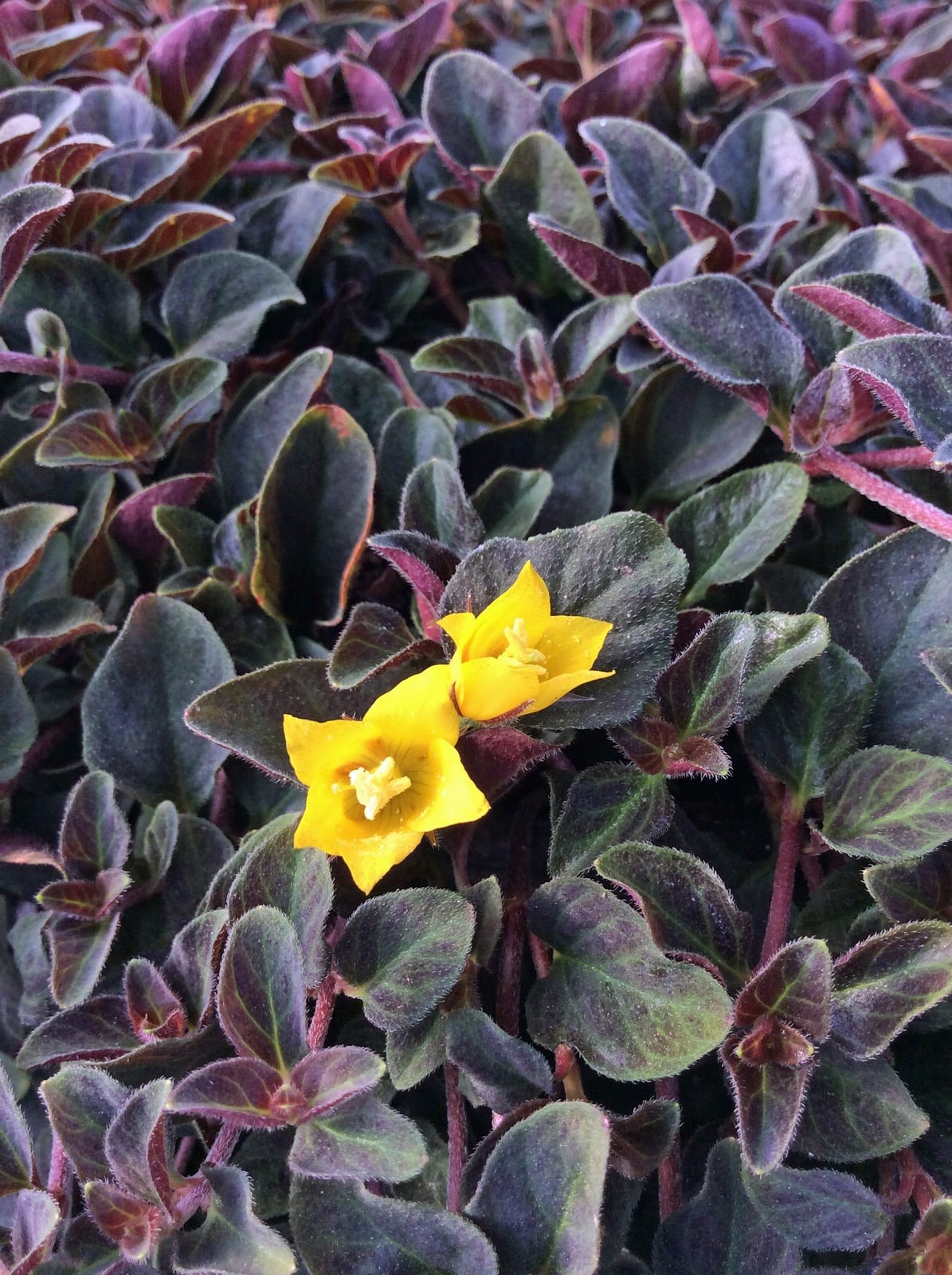
Lysimachia Midnight Sun.
The plant stays only about 2–4 inches tall and spreads outward, with small yellow flowers contrasting against the dark foliage. It’s suited to sun or partial shade and can be used in baskets, mixed containers or as a groundcover.
That dark foliage is why we’re interested in it.
Chartreuse creeping Jenny is useful because it brightens combinations. Midnight Sun does almost the exact opposite: it gives you a dark background that can make brighter flowers stand out.
I’d particularly like to see this with yellows, oranges, pinks and lighter foliage.
Dichondra Green Surfer
This one is brand new from Benary.
Most gardeners who recognize Dichondra probably know Silver Falls or similar silver-leaved forms.
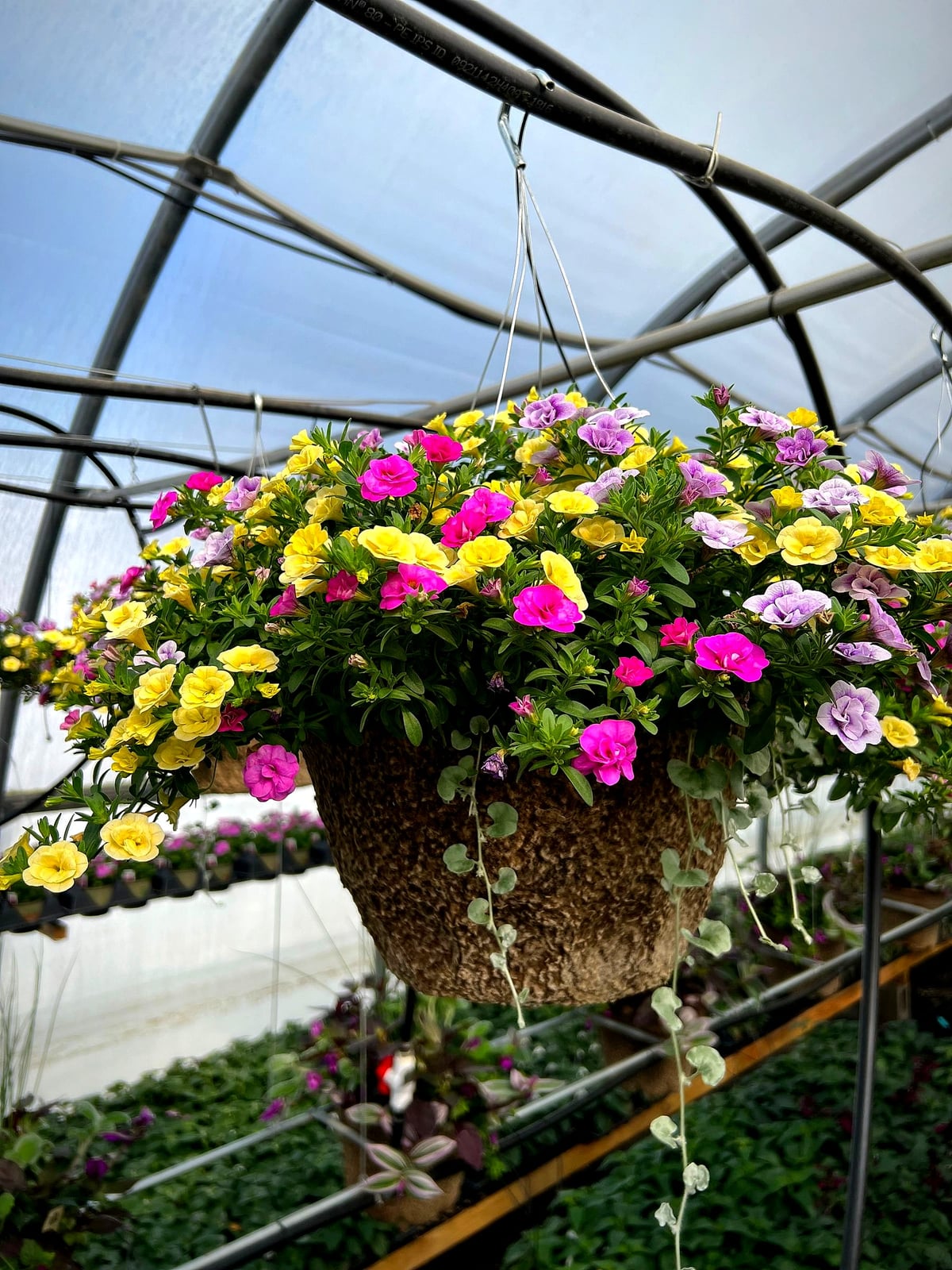
Silver dichondra trailing out of a calibrachoa basket — the look most gardeners already know. Green Surfer is the same idea in dark green.
Green Surfer gives the same basic idea in dark green.

Dichondra Other Green Surfer, as Ball lists it.
And this plant can really trail.
Benary lists Green Surfer at only around 3 inches tall but potentially 59 inches long. It’s intended specifically for hanging baskets, mixed containers and bedding, in sun to partial sun.
That’s nearly five feet of potential trailing growth.
Benary also reports germination above 85 percent, which is significant because unlike most of the specialty foliage plants used in combinations, this one is grown from seed.
I think this could be a really useful green spiller where silver Dichondra would be too much of a contrast.
Glechoma ‘Dappled Light’
This one is interesting because you’ve probably seen its relatives growing somewhere you didn’t want them.
Glechoma is ground ivy, also commonly called creeping Charlie.
Yes, that creeping Charlie.
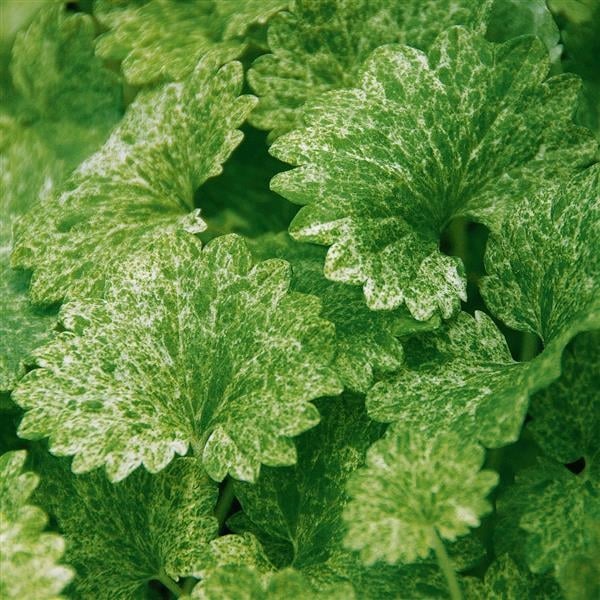
Glechoma Other Dappled Light, as Ball lists it.
But Dappled Light was selected for ornamental foliage. Its rounded green leaves are covered with a speckled creamy-white variegation, and it has a dense trailing habit. The variety originated as a mutation of the older ‘Variegata’ form.
This is a plant I’d primarily use as a container component, where its aggressive creeping habit becomes an advantage instead of something you’re fighting in the lawn.
It also gives us something the first two don’t: a trailing plant that can work well where there isn’t blazing full sun. The species tolerates everything from sun through substantial shade, although appearance and vigor will vary with conditions.
Aptenia ‘Golden Cascade’
This isn’t technically brand-new for 2027, but it’s new enough — and different enough — that we’re adding it.
Golden Cascade from Kientzler is a succulent trailing plant with bright chartreuse-gold foliage.
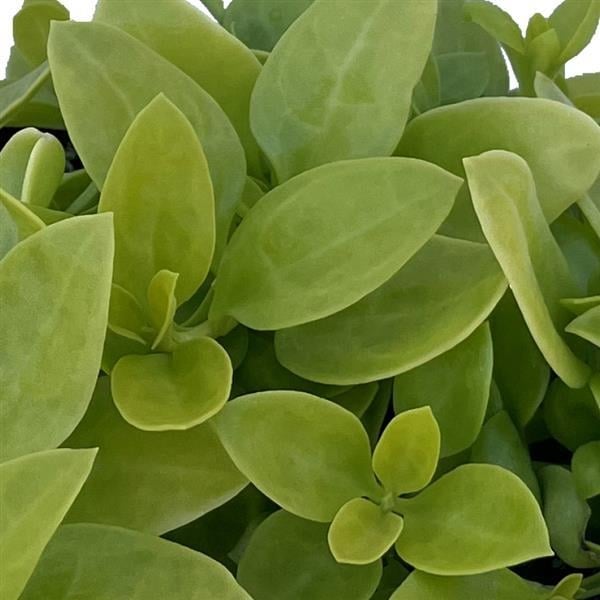
Aptenia Golden Cascade.
And this one is about heat.
Kientzler describes Aptenia as a heat- and drought-resistant trailing component, with succulent leaves and growth trailing to roughly 40 cm.
Golden Cascade has already been attracting attention in trials. D.S. Cole Growers highlighted it as a potential alternative to golden creeping Jenny because it maintains strong color through summer but grows more slowly and doesn’t overwhelm neighboring plants. It was also named the best heat-tolerant annual in Mast Young Plants’ 2025 trial.
That combination is particularly interesting to me.
Creeping Jenny is beautiful, but it can become a bully in a mixed container.
A succulent, heat-tolerant chartreuse trailer that stays a little more controlled could be extremely useful in an Indiana summer.
Why Are We Adding All These?
Because mixed containers aren’t just about finding three flowers that look good together in April.
We’re trying to build combinations that still make sense in July and August.
Sometimes improving a basket doesn’t require finding a better petunia. It means finding better plants to grow around it.
These four give us four very different tools:
- ✓ Midnight Sun — dark contrast
- ✓ Green Surfer — long, clean green trails
- ✓ Dappled Light — variegation and shade versatility
- ✓ Golden Cascade — chartreuse color with serious heat tolerance
You’ll start seeing us experiment with these in our combinations next spring.
Hoosier Tip
When a spiller takes over a container by midsummer, the usual cause isn’t the pot — it’s pairing a vigorous trailer with neighbors that grow slower than it does. Match the spiller to the company it keeps, and you’ll shear a lot less in July.
Reference: Benary and Kientzler product information; D.S. Cole Growers and Mast Young Plants 2025 trial notes. Variety photography courtesy of Ball Seed / Ball Horticultural Company.