 Plant Selection
The Future of Petunias: Danziger's New Amazonas Series

Owner, Schlegel Greenhouse · July 16, 2026
The most talked-about petunias at Cultivate ’26 look less like standard bedding plants and more like small watercolors.
├─ Plum Cockatoo — the original
├─ Pink Macaw — new
├─ Violet Parakeet — new
└─ Midnight Finch — new
Series theme: bold feathered veining — each variety named for a tropical bird.
Every year, breeders wrestle with the same question: how do you make one of America’s favorite annuals surprising again?
For the last decade the answer was mostly muscle. Better vigor. Better weather tolerance. Longer bloom windows. Those races mattered — they’re why a modern petunia shrugs off a June storm that would have flattened its grandparents.
But walking the Danziger display at Cultivate ’26, I watched something different stop people in their tracks. Not vigor. Pattern.
If you’ve seen Amazonas Plum Cockatoo, you already know the effect. Its feathered veining doesn’t look quite like anything else on the market — closer to a watercolor than a flower tag. Now it’s getting company.
Plum Cockatoo — the One That Started It
The original. Smoky plum feathering over a light face, and the flower that proved a petunia could be a conversation piece first and a spreader second.
Pink Macaw — New
The same artistic feathering carried into warm pink territory. Of the three introductions, this is the one I’d expect to win over gardeners who found Plum Cockatoo a little moody.
Violet Parakeet — New
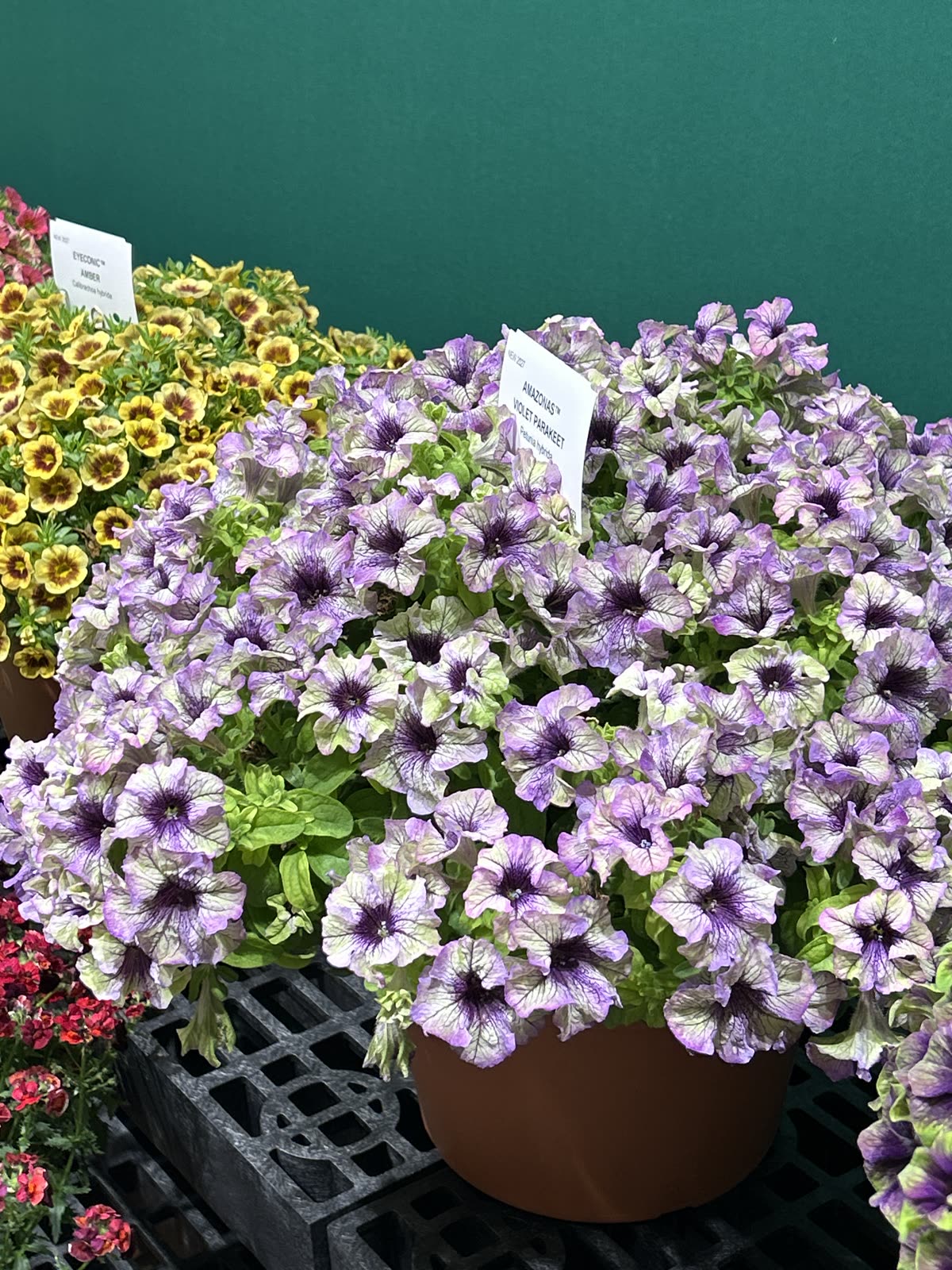
The one in the photo above, shot on the show floor. Soft lavender petals with a deep violet throat and inked veining that runs all the way to ruffled, green-kissed edges. In a full pot the effect is remarkable — fifty small watercolors, no two quite alike.
Midnight Finch — New
The darkest of the family. Where the others feather light over dark, this one goes the other direction and lets the pattern smolder.
The Part I Love Most: the Green
Here’s my personal bias: I love green flowers. Always have. And the detail that sold me on this series is that the green isn’t just foliage — it lives in the petals themselves, washing over the edges of the pinks and purples like the flower can’t quite decide where the leaf ends and the bloom begins.
Green-edged flowers aren’t for everyone. But the gardeners who love them tend to really love them — and if you’re one of us, this series feels like it was bred with you in mind.
Why This Matters
Petunia breeding has quietly changed its goal. The horsepower problems — vigor, weather, bloom — are largely solved, so the frontier has moved to artistry. Many modern petunias now function almost like living artwork, and collectors treat new pattern introductions the way houseplant people treat a rare philodendron.
The Amazonas series is the clearest example of that trend on the market right now.
| Variety | Status | The look |
|---|---|---|
| Plum Cockatoo | Original | Smoky plum feathering — the icon |
| Pink Macaw | New | The pattern, warmed up to pink |
| Violet Parakeet | New | Lavender with inked violet veining |
| Midnight Finch | New | The dark one — pattern in reverse |
Bottom line: petunias keep proving they’re one of the most exciting plants in ornamental breeding. Even an annual your grandmother grew can still surprise you.
Hoosier Tip
Patterned petunias like these earn their keep up close, not at the curb. Give them a pot by the front door or on the patio table where the veining can be admired at arm’s length — and feed them like any other petunia, weekly, because a hungry petunia stops painting.
More on plant selection, every Friday
Three growing guides like this one and a short note from the greenhouse, free, once a week. Written for Indiana gardens.
Reference: Danziger breeder introductions · Cultivate ’26 (AmericanHort, Columbus OH) · Schlegel Greenhouse show-floor notes