 Plant Selection
Mums Aren't the Only Flower for Fall: Meet the Aster
Owner, Schlegel Greenhouse · August 22, 2026
Everyone reaches for a mum in September — but if you want fall color that doesn’t immediately look like fall decorating, the aster is one of the best plants almost nobody thinks to buy.
We grow a lot of mums. They’re popular for a reason: colorful, heavy-flowering, and nothing quite says fall like a big mum on the front porch. But they aren’t your only option. One of our favorites that starts showing up in garden centers in September is the aster.
A Different Kind of Fall Color
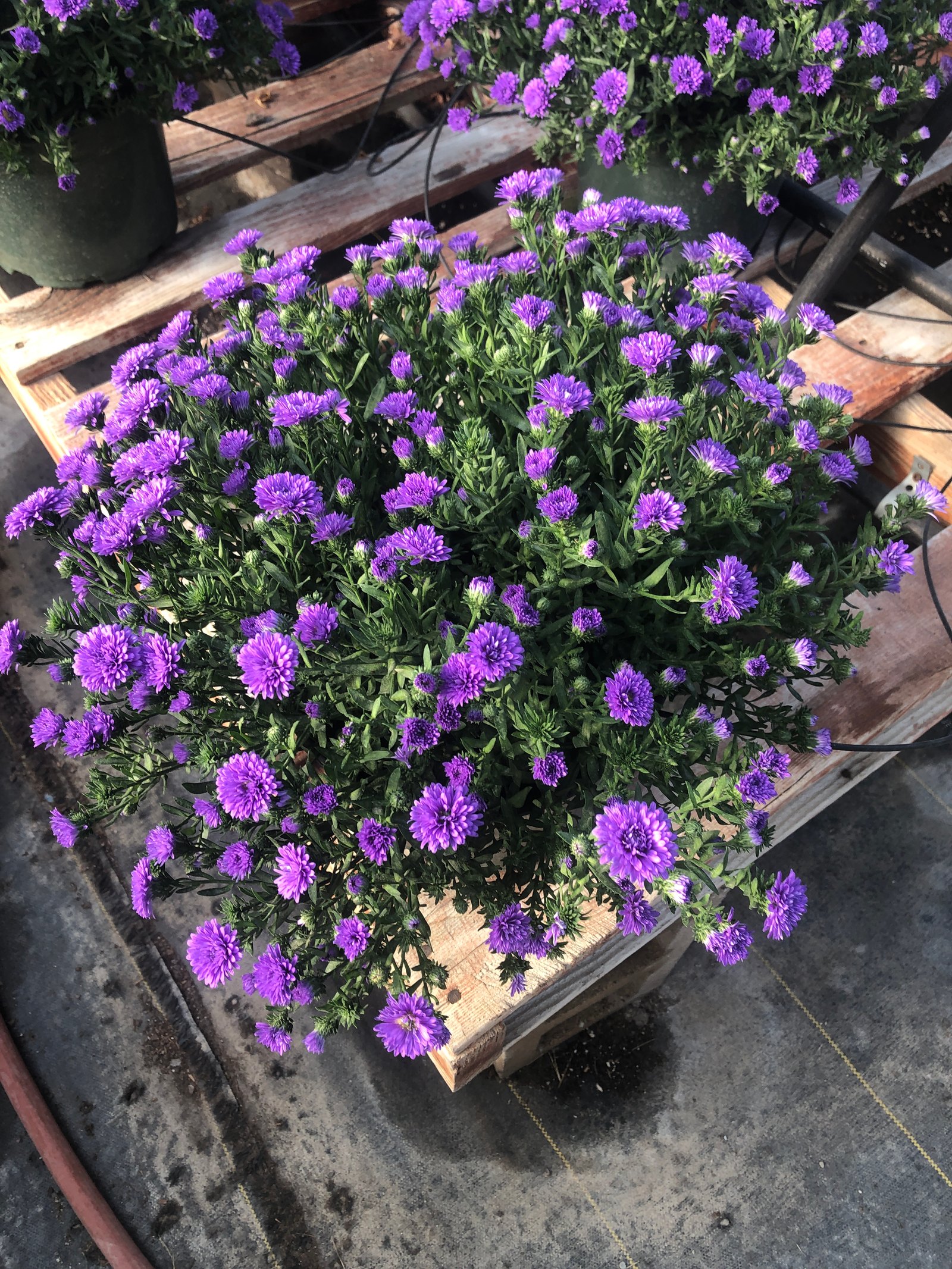
Asters have a completely different look from mums. Instead of a few very large flowers, an aster can be covered with hundreds of smaller blooms. Purple and blue are the colors most associated with them, but you’ll also find pinks and other shades. Put a purple aster next to an ornamental grass, a mum, or a pumpkin and it adds a completely different texture. And unlike your pumpkin, the aster can go in the ground and come back next year.
The Henry Asters We Grow
We grow the Henry series, which has double flowers. The double bloom gives them a fuller, more premium look than a traditional single-flowered aster.
- ✓ Henry I Blue — stays around 10–16 inches tall, masses of roughly 1½-inch double flowers, hardy in Zones 3a–8b (plenty hardy for central Indiana). Ball also lists it as attractive to bees.
- ✓ Henry I Pink — same compact habit and double flowers; listed as attracting both bees and butterflies.
We like the doubles because they’re extremely showy when they’re covered in flowers.
But Single Asters Are Great Too
I wouldn’t say a double aster is better than a single — they’re just different. Traditional single asters have the familiar daisy-like flower with an open center. There’s something really natural about them, and that exposed center makes the flowers easy for pollinators to work.
And pollinators are exactly why asters matter so much in fall. By September, a lot of the plants that fed bees and butterflies earlier in the summer are slowing down. Asters are just getting started — which makes them one of the most valuable things you can add to a pollinator garden this time of year.
Plant Them Instead of Throwing Them Away
If you buy an aster for your porch this fall, don’t automatically toss it when you’re done decorating. Plant it. Give it a sunny spot with decent drainage and keep it watered while the roots establish. Fall is actually a good time to establish hardy perennials, because the soil stays warm even as the air cools. The earlier in fall you get it in the ground, the more root time it has before winter — and next year it becomes part of the landscape.
When Will You See Ours?
Our asters should begin arriving at garden centers in September. We’re not trying to rush you into fall — it’s still August and there’s plenty of summer left. But when the mums start showing up over the next few weeks, look around for the asters too. They’re one of the best fall plants that doesn’t get nearly enough attention.
Hoosier Tip
Buy your aster while it’s still mostly in bud, not in full bloom, and get it in the ground early — a budded plant settling into warm September soil gives you a longer show this fall and the best odds of it returning next year.
More on plant selection, every Friday
Three growing guides like this one and a short note from the greenhouse, free, once a week. Written for Indiana gardens.
Reference: Ball Seed variety information · Purdue University Extension · Schlegel Greenhouse production notes