 Plant Selection
An Appreciation of Echinacea: The Nearly Perfect Perennial
Owner, Schlegel Greenhouse · August 14, 2026
I’ll admit my bias right away: Echinacea is my favorite plant.
If I had to recommend one perennial to someone starting a garden in Indiana, it would be very hard not to point them to a coneflower. They’re beautiful. They’re tough. They’re perennial. They’re important pollinator plants. And the native species were growing across North America long before any of us started putting flower beds around our houses.
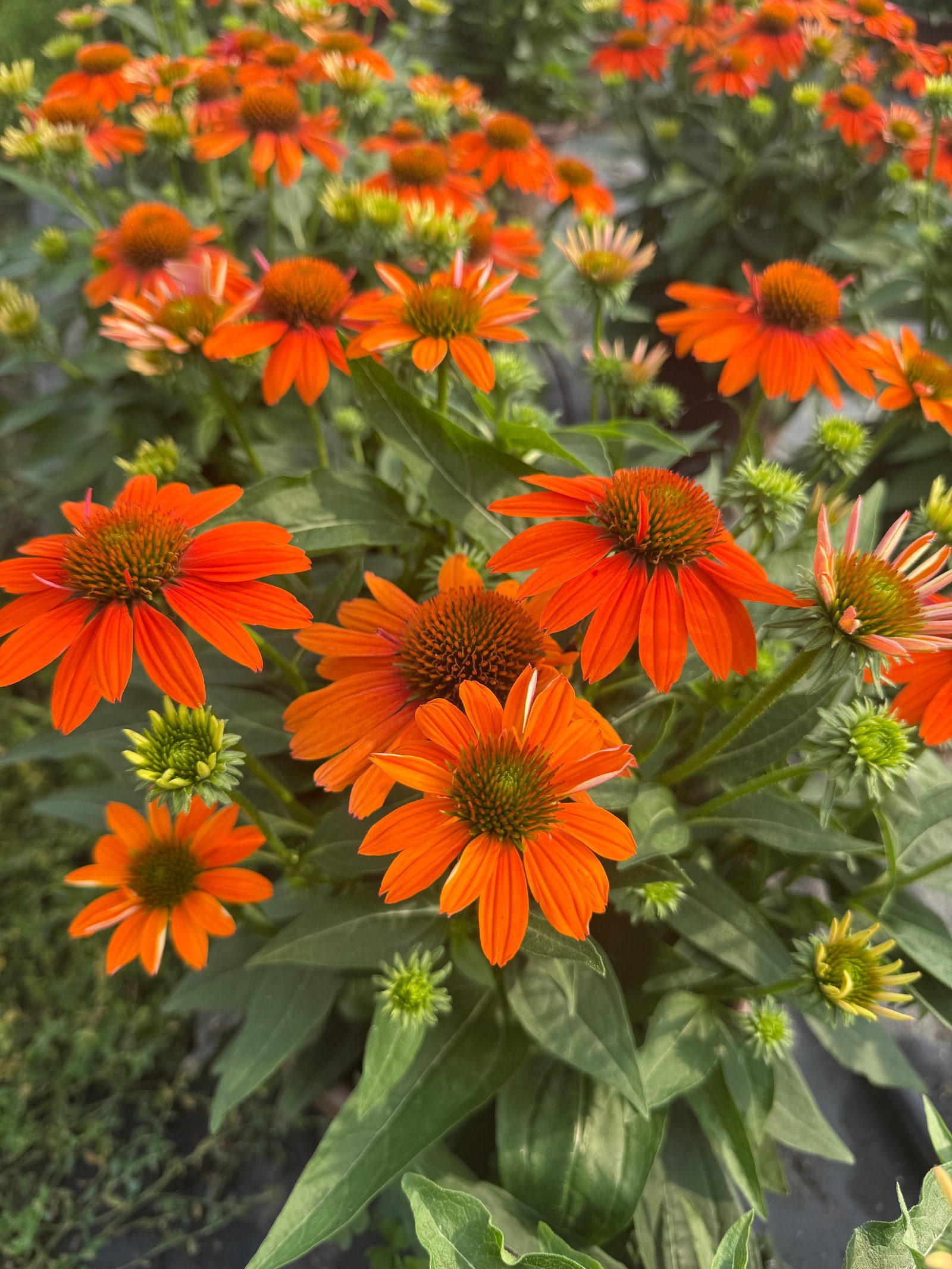
But modern breeding has taken Echinacea somewhere entirely new. The familiar purple coneflower is still fantastic — and today we can also grow it in red, orange, yellow, coral, pink, white, and just about everything in between.
From Indiana Native to Premium Perennial
Several Echinacea species are native to North America, including Echinacea purpurea, the purple coneflower native to Indiana and much of the eastern and central United States. The classic flower has a raised central cone surrounded by purple-pink petals.
That cone isn’t actually one flower. It’s made up of hundreds of tiny individual flowers called disk florets — which is exactly why you’ll see bees, butterflies, and other insects crawling around the cone rather than just landing in the center. And when the blooms finish, leaving some seed heads standing feeds the birds, especially finches. That’s a plant doing a lot of work.
Why We Love Echinacea
North American native
↓
Pollinator plant — bees & butterflies
↓
Long summer bloom
↓
Heat & drought tolerant once established
↓
Perennial in Indiana
↓
Seeds for birds
One plant. Nearly four seasons of value.
Sombrero: Premium Color, Classic Coneflower Look
One series we’re particularly excited about is Sombrero. This is where modern Echinacea breeding gets interesting — it keeps that unmistakable coneflower look but delivers richer, more unusual colors on a compact, sturdy, heavy-flowering plant. These aren’t back-of-the-border plants. They’re showpieces, and they work beautifully in groups, mixed perennial beds, and even large patio containers. Give them full sun and well-drained soil, and once established they’re remarkably durable.
SunMagic: Echinacea Turned Up a Notch
Our SunMagic varieties take that same idea even further — large flowers, intense colors, strong stems, and a premium look that can make you stop and ask, “That’s an Echinacea?” That’s exactly what excites me about modern perennial breeding. We’re not replacing the traditional purple coneflower. We’re expanding what a coneflower can be.
Don’t Forget Cheyenne Spirit
If you want to understand how dramatically Echinacea has changed, Cheyenne Spirit is one of the best places to start. Instead of buying separate varieties for different colors, seed-grown Cheyenne Spirit produces an incredible mix of red, orange, yellow, cream, purple, and pink. It’s exceptionally tough, hardy roughly through USDA Zones 4–9, and can bloom its first year from seed. Plant several together and you get an entire Echinacea color palette from one variety.
How to Keep Echinacea Coming Back
Echinacea doesn’t ask for much, but there’s one thing it truly dislikes: wet feet. For Indiana gardeners:
- ✓ Give it sun. Full sun produces the strongest growth and flowering.
- ✓ Establish it properly. “Drought tolerant” doesn’t mean a newly planted coneflower can skip watering — keep it consistently watered its first season.
- ✓ Prioritize drainage. Cold usually isn’t the problem. Cold, saturated soil is.
- ✓ Don’t baby it. Once established, Echinacea performs better with moderate fertility than heavy feeding.
And consider leaving some of those dried seed heads over winter. They’re beautiful with frost or snow on them, and they feed the birds.
Caleb’s Take
There are flashier plants. There are plants with bigger flowers. And there are plants that bloom longer. But there aren’t many that combine beauty, durability, pollinator value, native heritage, and modern breeding quite like Echinacea. That’s why it’s my favorite.
Hoosier Tip
When you’re shopping coneflowers, resist buying the one plant in fullest bloom and instead pick the bushiest plant with the most buds. Echinacea establishes on its roots, not its flowers — the budded plant will reward you far longer, both this year and every year after.
More on plant selection, every Friday
Three growing guides like this one and a short note from the greenhouse, free, once a week. Written for Indiana gardens.
Reference: Purdue University Extension · Schlegel Greenhouse production notes