 Container Care
You Can't Live on Water Alone — And Neither Can Your Plants

Sales Director & Design Expert · April 6, 2026
There's a funny assumption people make when they first start caring for plants: "If I just water it, it should be fine." But you wouldn't expect a person to survive on water alone—and plants aren't any different. Water keeps things moving. It doesn't build anything. Plants need food, real nutrition, to grow properly, just like we do.
Plants Need a Balanced Diet
In humans, we talk about protein, carbs, fats, and vitamins. In plants, it's nitrogen, phosphorus, potassium, and a range of micronutrients.
- ✓ Nitrogen (N): growth — like protein for muscle
- ✓ Phosphorus (P): roots and energy
- ✓ Potassium (K): overall health and resilience
When plants don't get enough of these, you'll see it—pale leaves, weak growth, poor flowering, and susceptibility to stress. This isn't speculation; plants require at least 17 essential nutrients, and deficiencies directly limit growth and health.
Junk Food for Plants Is a Real Thing
You can also overdo it—or feed the wrong thing. Too much nitrogen gives lush green growth that's weak and floppy. Too little potassium and plants struggle under stress. It's no different than a person eating nothing but fast food. You might grow, but not well.
Easy Fertilizers You Can Buy Anywhere
You don't need anything complicated. A few reliable options from any local garden center:
- ✓ All-purpose water-soluble (20-20-20): a good balanced diet for most plants
- ✓ Slow-release granular (14-14-14 Osmocote-style): feeds consistently over time
- ✓ Liquid houseplant fertilizer (10-10-10): easy to apply, great for indoor plants
- ✓ Bloom boosters (10-30-20): for flowering plants when you want color
The key is consistency, not intensity.
The Takeaway
Water keeps plants alive. Food helps them thrive. Just like people, the difference between surviving and thriving comes down to what—and how—you feed them.
Hoosier Tip
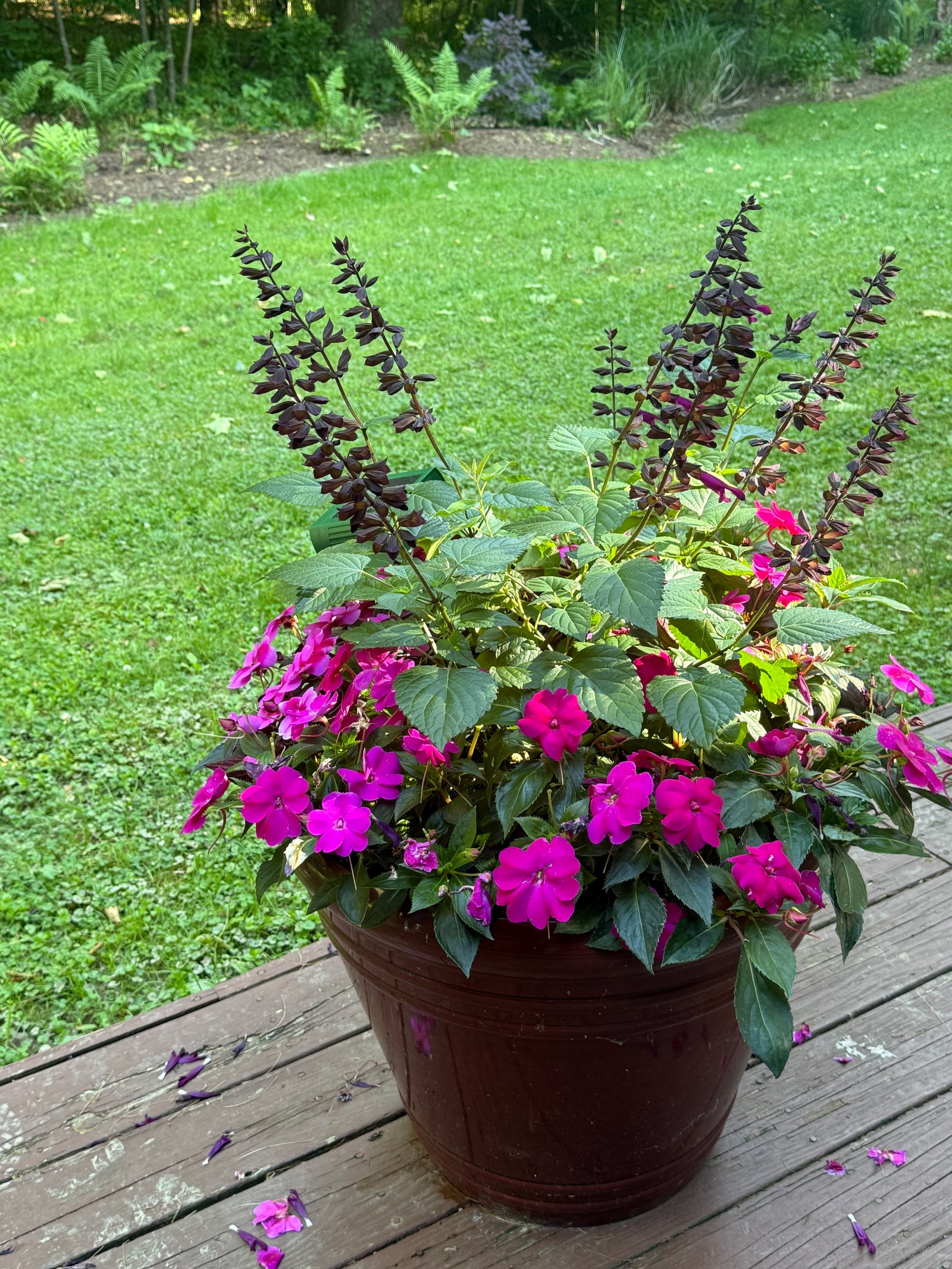
Pick up Jack's Classic 20-20-20 or Miracle-Gro Water Soluble All Purpose and feed every 1–2 weeks. Your containers will stay full and blooming all season.
More on container care, every Friday
Three growing guides like this one and a short note from the greenhouse, free, once a week. Written for Indiana gardens.
Reference: Purdue University Extension — Indiana gardening resources