 Seasonal Tips
How to Fertilize SunPatiens (Without Overdoing It)

Owner, Schlegel Greenhouse · April 23, 2026
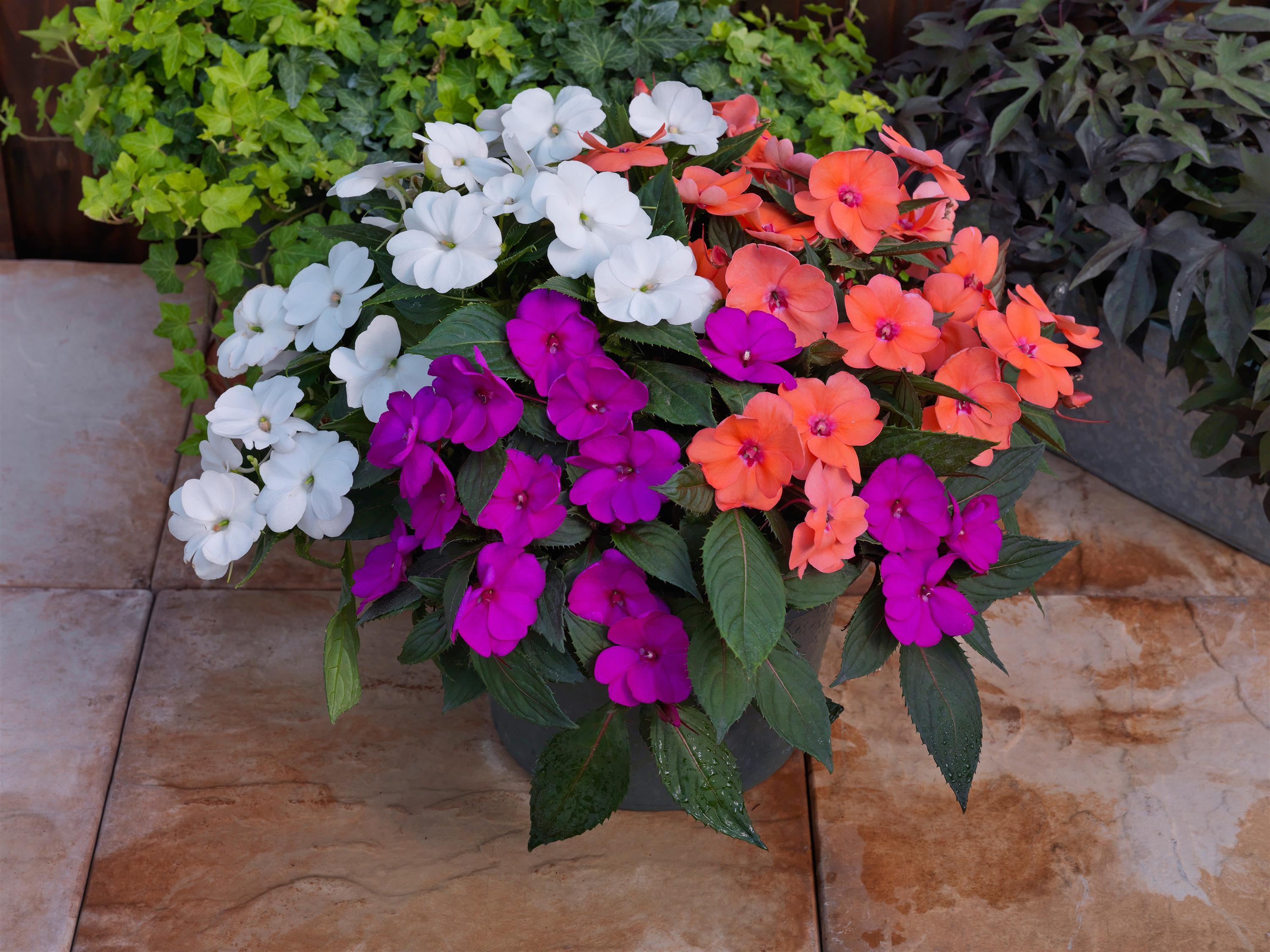
SunPatiens are one of the easiest plants to grow. But when they don’t look right, it’s usually not because they need more fertilizer. It’s because they’re getting the wrong kind — or too much.
What SunPatiens Actually Need
SunPatiens are not heavy feeders. Guidance from Sakata Seed and Ball Seed grower resources is consistent:
- ✓ Moderate, consistent feeding works best
- ✓ Overfertilizing reduces flowering
- ✓ Controlled-release fertilizer is ideal
The goal isn’t to push them hard — it’s to keep them steady.
Best Fertilizer Plan
At planting
- ✓ Use a slow-release fertilizer — Osmocote, Nutricote, or Polyon are all good options
- ✓ Even feeding over weeks, not a spike
- ✓ Less risk of burn
- ✓ Strong long-term performance with no guesswork
During the season
- ✓ If you want to supplement, use a light liquid feed every 2–3 weeks
- ✓ A balanced fertilizer is fine
- ✓ Keep it light — you’re topping off, not pushing
More fertilizer does not mean more blooms.
How to Keep Them Blooming
To keep SunPatiens in color:
- ✓ Keep moisture consistent
- ✓ Avoid stress
- ✓ Don’t overfeed
Once you push them too hard, you get more leaves and fewer flowers.
What Not to Do
- ✓ Don’t overfertilize
- ✓ Don’t try to “push growth”
- ✓ Don’t assume they need constant feeding
The Real Takeaway
SunPatiens don’t need to be pushed. They need consistency. A slow-release fertilizer at planting does almost all the work — a light liquid feed later in the season is optional.
Hoosier Tip
If SunPatiens look off mid-summer, step back before you reach for fertilizer. Most of the time the answer is water, shade, or simply patience — not another feeding.
More on seasonal tips, every Friday
Three growing guides like this one and a short note from the greenhouse, free, once a week. Written for Indiana gardens.
Reference: Sakata Seed, Ball Seed grower guides · Purdue University Extension · Michigan State University Extension — Indiana gardening