
Reading a Plant Page
What a Trial Rating Means
When a plant page says “Rated 4.6 out of 5, Penn State Flower Trials,” that number is a summer of evidence. The plant was grown beside hundreds of others and scored again and again by people whose job is to notice what fails.
The Short Version
How to Read the Score
Trial gardens score on a five-point scale. Penn State and the University of Georgia print the same key on their reports: 3 is average, 4 is good, 5 is outstanding.
So a plant rated 4 or higher was a good plant all season. Over 4.5 is great: close to perfect every time someone walked by with a clipboard. Georgia's own guide calls 4.5 to 5 truly standout.
- Below 3
- Below average. The trials' key calls a 1 unacceptable.
- 3 to 4
- Average. Fine in a garden, but not a standout.
- 4 to 4.5
- Good. A plant that looked good all season.
- 4.5 and up
- Great. Close to outstanding at every visit.
Keep in mind that the number is a season average, not one good day. Every visit pulls it up or down, so a 4.6 means the plant looked good in early summer, in the August heat and into September.
The Method
How a Trial Garden Scores a Plant
Every trial has its own routine, but the good ones share the same idea: grow everything the same way, look often, and write it down.
Grown the same way
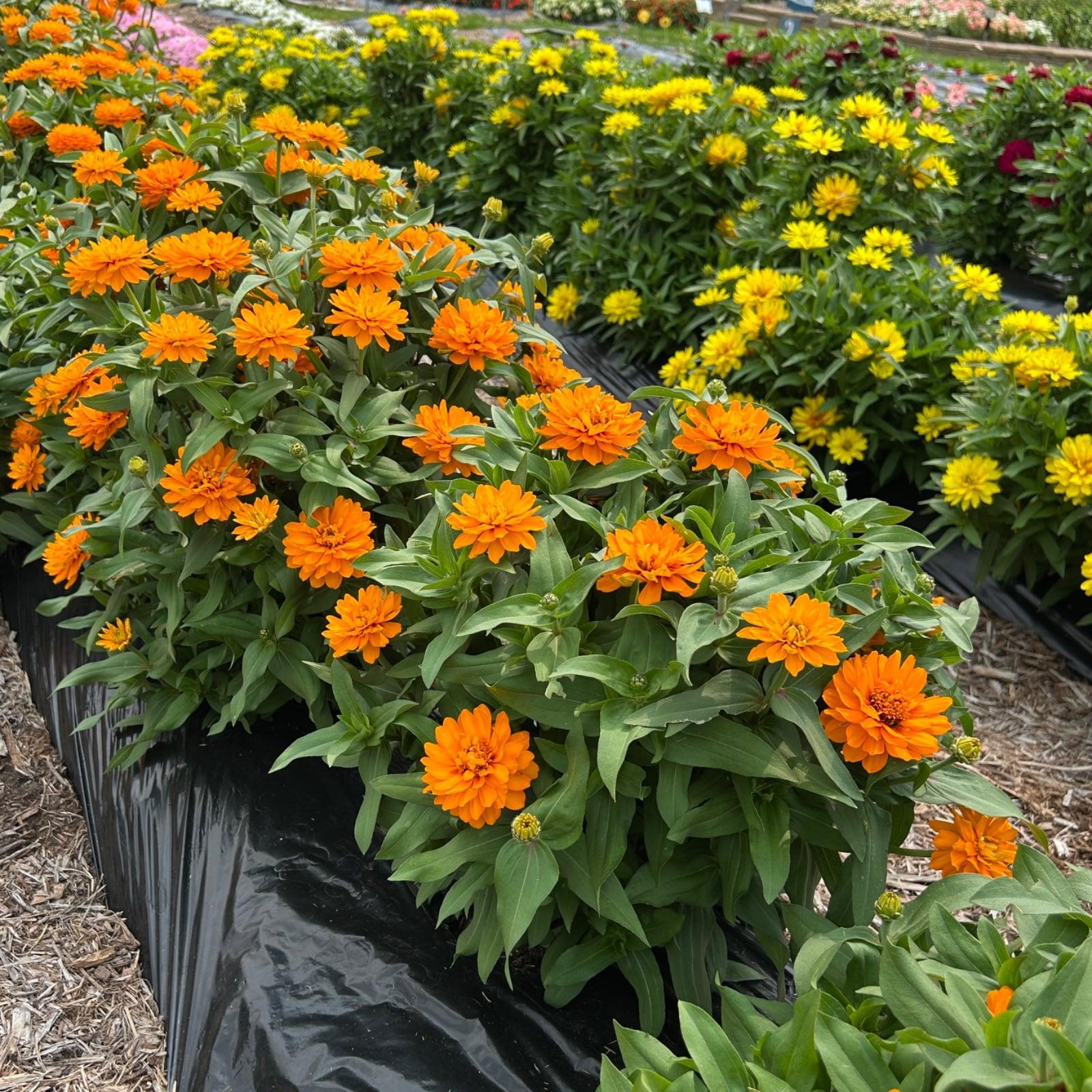
Every entry gets the same soil, water, feeding and planting date. Penn State grows its annuals in containers, in sun and in shade. Raker-Roberta's plants into raised rows covered in black plastic, with drip lines carrying water and fertilizer.
Scored on more than flowers
Penn State and the University of Georgia score four things at each visit: how even the planting is, how well it flowers, how the leaves look, and the plant's overall growth. Those four are averaged into that day's score.
Scored again and again
Penn State rates three times a summer: early July, early August and early September. Georgia rates from June through September. Raker-Roberta's staff look at every entry each week.
Averaged for the season
The season rating is the average of the visits. A plant that looks great in July and falls apart by September cannot hold a high number.
Here is how that adds up at Penn State. In 2025, Agastache Maestro Gold scored a 5, a 5 and a 4.88 at its three visits. Its season rating: 4.96.
Where the Numbers Come From
The Trial Gardens Behind the Ratings
Hoosier Boy plant pages show season ratings from three trial gardens. Each one sees a different kind of summer, so a plant that scores well at more than one has proven itself in more than one climate.
Penn State Flower Trials
Landisville, Pennsylvania
- Run by Penn State's agricultural research center since about 1933, which makes it one of the oldest flower trials anywhere.
- About 500 to 600 container entries a year, plus in-ground beds that test perennials over three winters.
- Master Gardener volunteers help plant and keep up the gardens.
University of Georgia Trial Gardens
Athens, Georgia
- Started in 1982 by Allan Armitage and Michael Dirr, two of the best-known names in American horticulture.
- The place to learn how a plant handles real Southern heat and humidity.
- Nearly 500 entries were rated in 2024, from planting in April to the last rating in September.
Raker-Roberta's Trial Gardens
Litchfield, Michigan
- Over 3,000 varieties a year, planted in rows, containers and hanging baskets.
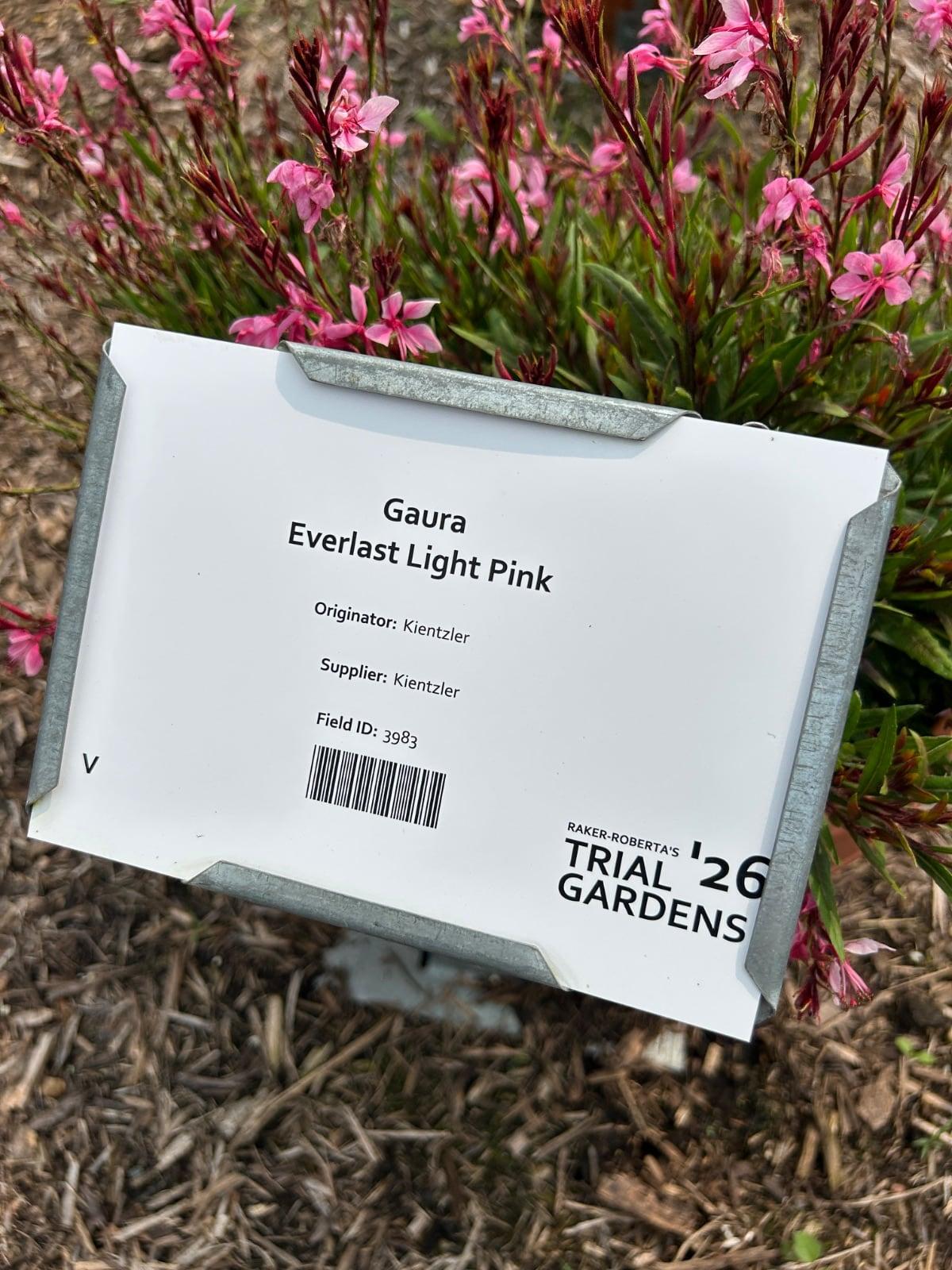
- A northern season, rated weekly by the trial staff. Each plant is judged against others of its kind, petunias against petunias.
- Run by Raker-Roberta's Young Plants, a commercial grower rather than a university. It describes its trial as confidential and objective.
Other trials publish awards or favorites rather than season scores, and those appear on plant pages as awards: Colorado State University in Fort Collins, Ohio State's Chadwick Arboretum in Columbus, Michigan State, and Mast Young Plants in Grand Rapids.
A Step Above
How Trial Gardens Choose Award Winners
Some trials turn their scores into named awards, each with its own printed rule.
- Director's Select, Penn State
- A final season rating of 4.6 or higher.
- Best of Show, Penn State
- A perfect score at every rating, all season long.
- Best of Species, Penn State
- The highest rating among all the entries of its kind.
- Classic City Award, Georgia
- About a dozen plants a year, chosen for how they performed across the whole year.
- Plants of Distinction, Georgia
- Plants picked at their peak during the season.
Visitor votes, staff picks and industry awards, like the Retailers' Choice awards at the Cultivate trade show, are listed on plant pages too. They are a nice signal, but they are not a trial score.
All-America Selections works differently again: every entry is judged against the varieties already on the market. What it means to be an AAS Winner.
Why It Matters
A Season of Proof Before You Buy
Every year breeders introduce hundreds of new annuals and perennials, and every one looks good in its catalog photo. Trial gardens are where the claims meet an actual summer.
For breeders, the trials are honest feedback. Penn State describes its work as showing companies which varieties succeed and which fail, so they can decide what to keep and what to drop.
For greenhouses, they are how a grower picks next year's crop. Schlegel Greenhouse uses these published results when it chooses which varieties to grow, and its staff walked the Michigan trials in July 2026 to see the plants in person.
For gardeners, they are the closest thing to trying a plant for a whole summer before you buy it. Most of that work is paid for by breeders' entry fees and done by university staff, students and Master Gardener volunteers.
On This Site
How Hoosier Boy Shows Trial Results
- A rating shows only when it is 4.25 or higher out of 5. A weaker season is left off rather than shown as a low score.
- Each line names one trial and one year, with a link to that trial's published results.
- Scores are never averaged across trials or years. Each trial grows, feeds and rates in its own way, so a 4.5 in Georgia and a 4.5 in Michigan are two separate facts.
- A series award counts for each color in the series, and the line says so.
Sources
Penn State Flower Trials trial reports (2024 to 2026); University of Georgia Trial Gardens about page and 2024 evaluation report; Raker-Roberta's Trial Gardens about page and 2026 sponsor guide; Penn State News, 2018.
Plant Library
See the Plants That Earned It
Turn on the Trial Recognized filter in the Plant Library to see every plant with an award or a season rating of 4.25 or higher.