 Plant Spotlights
Why Marigolds Became the Flower of Día de los Muertos

Vice President & Owner, Schlegel Greenhouse · October 16, 2026
When we think about marigolds in Indiana, we usually think about summer flower beds. In Mexico, they carry a meaning that goes back much further than their use as garden plants.
Marigolds are inexpensive, colorful, dependable in the heat and among the most familiar annuals sold at garden centers. They’re also one of the most recognizable symbols of Día de los Muertos, the Day of the Dead, celebrated in late October and early November and centered on November 1 and 2.
The Flower of the Dead
The marigold most closely associated with the holiday is Tagetes erecta, often called the Mexican or African marigold. In Mexico it’s known as cempásuchil, a name that comes from Nahuatl, the language of the Aztecs and other Indigenous peoples of central Mexico. It’s usually translated as “twenty flowers” or “twenty-petal flower.”
Long before Spanish colonization, marigolds were already important ceremonial plants in central Mexico. Mexico’s National Institute of Indigenous Peoples notes that residue analysis of incense burners found among the ruins of the Templo Mayor in Mexico City shows the Mexica used cempásuchil ceremonially as an aromatic plant.
Why Marigolds Are Used on Altars
Día de los Muertos is a time for remembering and honoring loved ones who have died. Families build ofrendas, or offerings, often decorated with photographs, candles, favorite foods and flowers.
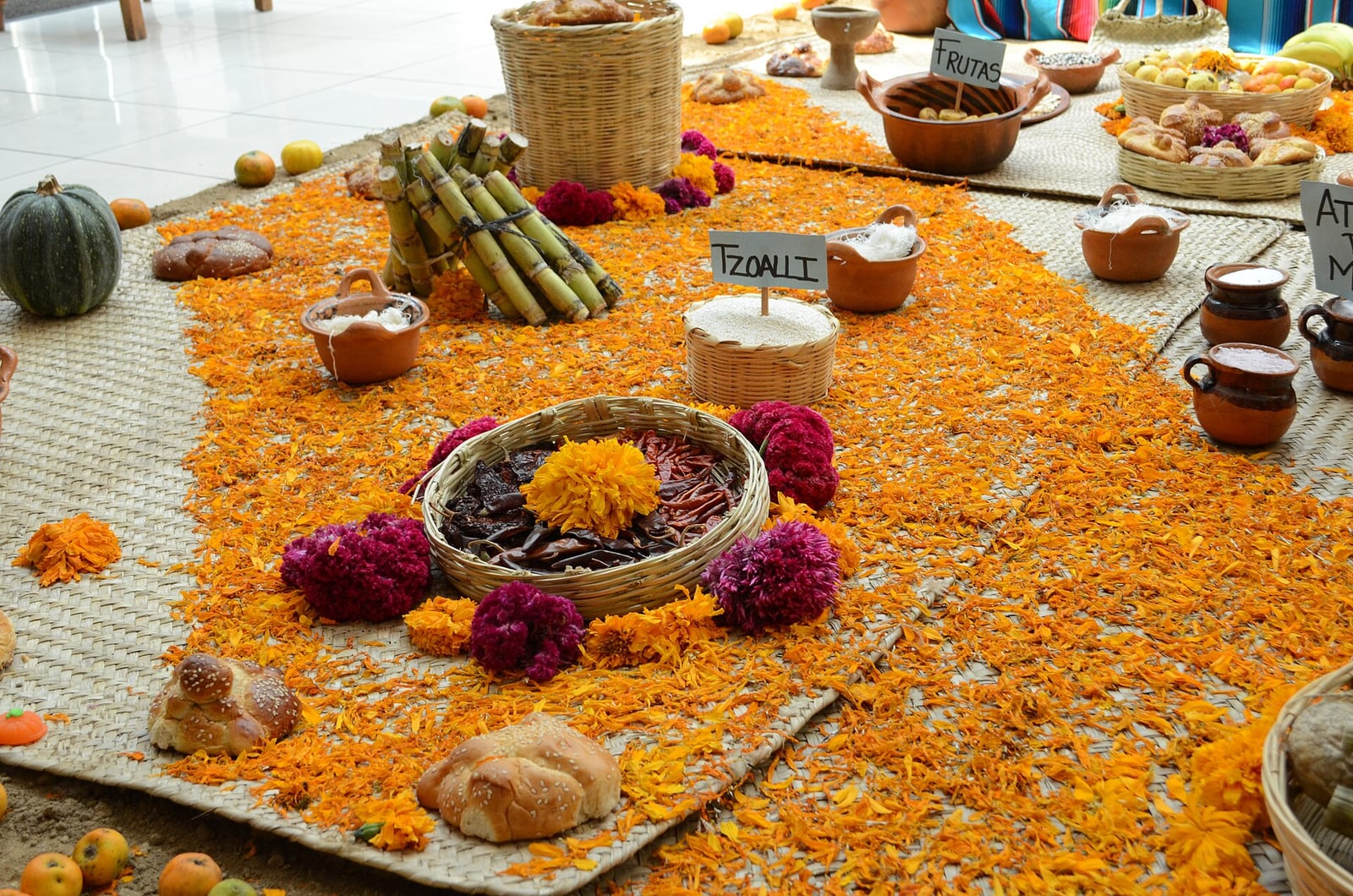
An ofrenda with cempásuchil petals laid out around offerings of food. Photo: Karla Andrew, via Wikimedia Commons, CC BY-SA 3.0.
Tradition holds that the marigold’s color and scent help guide the spirits of loved ones back to their families. Sometimes the flowers are arranged around the altar. Other times, petals are laid along the path leading toward it.
It’s a tradition that combines Indigenous Mexican beliefs with religious and cultural practices that developed over centuries. And while marigolds are probably the most recognizable flower of the holiday, the celebrations themselves vary considerably from one community and region to the next.
A Familiar Flower With a Different History
One of the interesting things about marigolds is how thoroughly they’ve become part of gardening around the world. Here in the United States, we commonly divide them into French marigolds (Tagetes patula) and African marigolds (Tagetes erecta). Despite those names, both species originated in the Americas. The names reflect their horticultural history, not where the plants evolved.
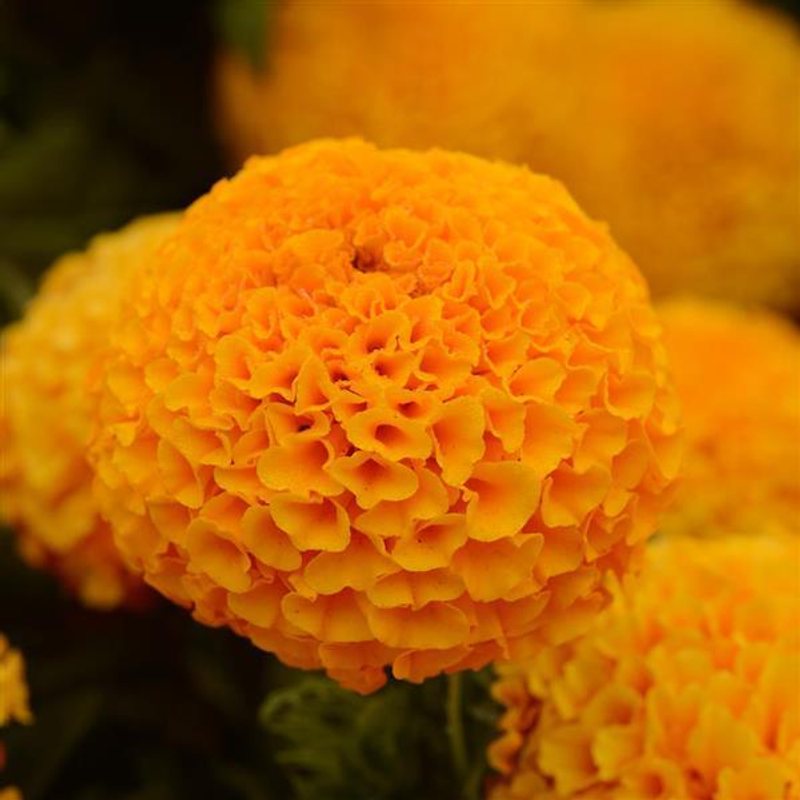
The marigold pictured with this article is Taishan Orange, an African marigold (Tagetes erecta) and the same species as cempásuchil. Photo courtesy of Ball Seed.
The large, rounded flowers most associated with Día de los Muertos are usually Tagetes erecta, although other marigolds show up in decorations too. Commercial breeding has given us countless colors, flower sizes and plant habits. We grow marigolds because they’re dependable garden plants, but it’s worth remembering that these plants have a much longer history than the varieties we see on greenhouse benches today.
For centuries, these flowers have carried meaning beyond their ornamental value. And each fall, when cempásuchil fills Mexican markets, cemeteries and homes with orange and yellow, that history is still very much alive.
Hoosier Tip
When you shop for marigolds next spring, check the tag for the botanical name. Tagetes erecta is the tall, big-flowered type; Tagetes patula is the compact French type. Knowing which one you have tells you how tall it will get and where it belongs in the bed.
More on plant spotlights, every Friday
Three growing guides like this one and a short note from the greenhouse, free, once a week. Written for Indiana gardens.
Reference: Instituto Nacional de los Pueblos Indígenas, Cempoalxóchitl, una flor mística y ancestral; UNESCO, Indigenous Festivity Dedicated to the Dead; Online Nahuatl Dictionary, cempohualxochitl; NC State Extension Plant Toolbox, Tagetes erecta; Tagetes patula; University of Wisconsin Extension, Marigolds.