 Troubleshooting
Why Are There So Many Spiders in My Garden Right Now?

Owner, Schlegel Greenhouse · August 29, 2026
If you’ve walked the yard early on a recent morning, you’ve seen them — big webs between shrubs, webs stretched across perennial beds, and sometimes a surprisingly large spider sitting right in the middle. Late August and September are when spiders get much more noticeable in Indiana.
That doesn’t mean there are suddenly more of them. A lot of the spiders you’re seeing have been in your garden all summer. They’re just finally big enough to notice.
Why We See So Many Spiders This Time of Year
Many common garden spiders spend spring and summer growing. By late summer the adults are larger, their webs are larger, and they’re much harder to miss. That’s especially true of orb weavers — the spiders responsible for those big, almost perfectly circular webs you find between plants, trees, decks, and occasionally directly across the path you were about to walk down. They become some of the most visible spiders in the landscape in late summer and fall. And as intimidating as a large spider in the middle of a two-foot web looks, these are generally not spiders gardeners need to be afraid of.
Indiana Has a Lot of Spiders
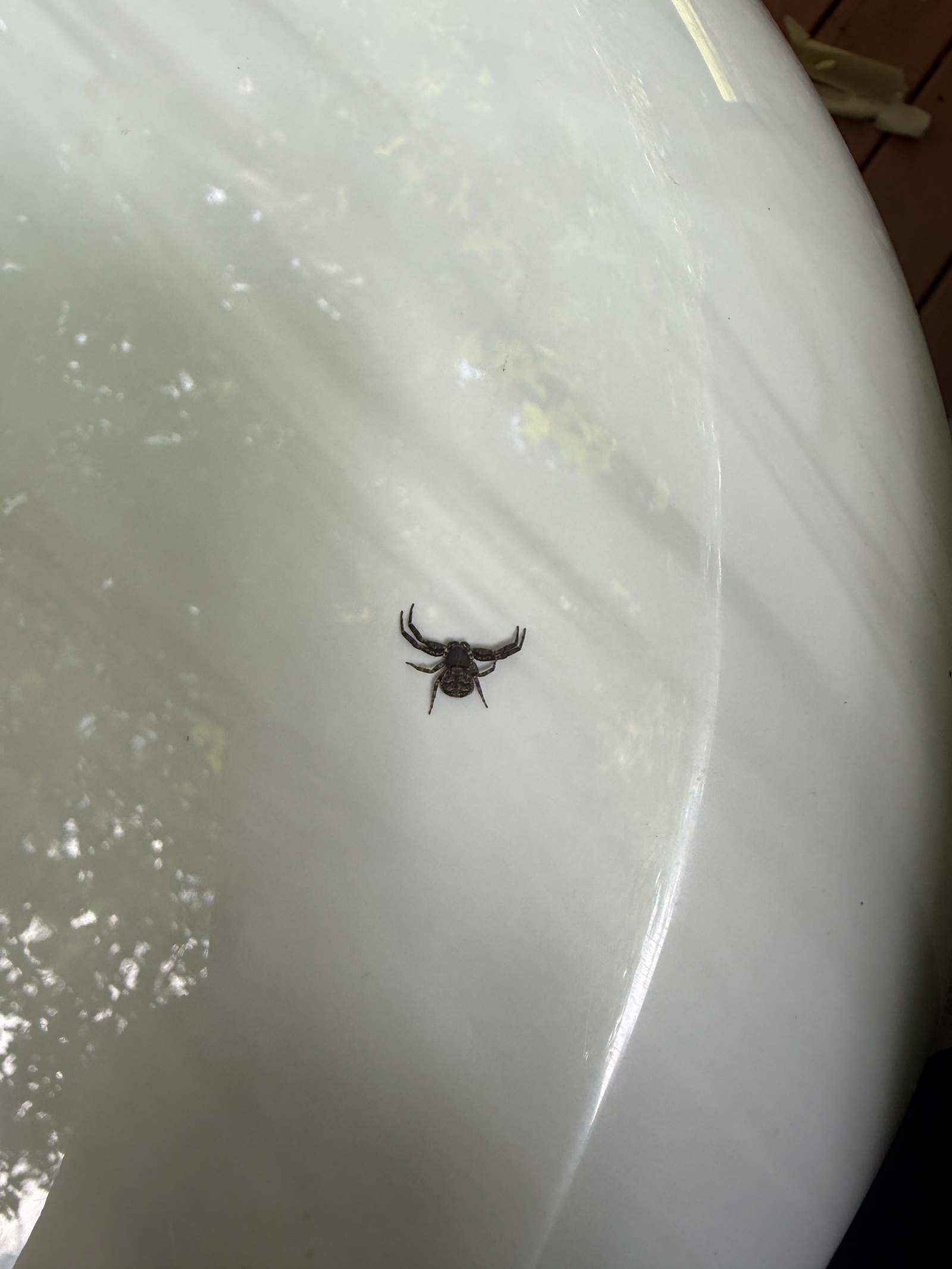
Around 400 species of spiders are known to occur in Indiana. Most are predators of insects and other small animals. Purdue points out that spiders live almost everywhere in the state — including our homes and gardens — feeding on prey small enough to capture. In an Indiana garden you might meet:
- ✓ Orb weavers — the classic web builders
- ✓ Wolf spiders — hunters that run along the ground rather than catching prey in a web
- ✓ Jumping spiders — small, active hunters you’ll see walking around leaves, walls, and patio furniture
- ✓ Garden spiders — including the large black-and-yellow garden spider that builds a very conspicuous web
- ✓ Grass spiders — responsible for many of the funnel-shaped webs in lawns and shrubs
They catch food in different ways, but they’re all doing basically the same job: eating other things in your garden.
So Are Spiders Good for the Garden?
Generally, yes. Spiders eat insects. They won’t distinguish between a pest and an insect you like, so I wouldn’t call them a targeted pest-control program — but they’re an important part of the food web that develops in a healthy landscape. And that’s something gardeners sometimes need to get comfortable with: a healthy garden isn’t a sterile one.
That's a Garden
There are plants
↓
Insects eating plants
↓
Pollinators visiting flowers
↓
Spiders eating insects
↓
Birds eating insects and spiders
Seeing predators means your garden has enough life to support predators.
But What About Venomous Spiders?
This is where reputation gets way ahead of the actual risk. Nearly all spiders use venom to subdue prey — that does not mean nearly all spiders are dangerous to people. Indiana DNR says that of the roughly 400 species in Indiana, only two are capable of inflicting serious injury to humans: the brown recluse and the black widow. Both are non-aggressive, and bites are rare. And importantly, neither one is the giant spider sitting in the middle of that beautiful circular web in your flower bed.
Brown recluse. The name says a lot — it likes to be left alone. Recluses tend to live in dry, undisturbed places like barns, sheds, garages, closets, boxes, and stored materials. Bites generally happen when a spider gets trapped against skin (inside clothing, shoes, or bedding) and defends itself. Even where recluses occur, verified bites are uncommon.
Black widow. Widows also prefer undisturbed spots — under rocks and boards, around old structures. They’re not hunting people. A bite can be medically serious, so you shouldn’t handle one, but Indiana DNR describes both species as non-aggressive and says bites are quite rare.
What if I Have Kids Playing in the Yard?
I’d still teach kids not to pick up spiders with their hands, the same way you teach them not to grab bees, wasps, or unfamiliar caterpillars. But I wouldn’t remove every garden spider because a child uses the yard. A big orb weaver in its web isn’t looking at your child as prey — humans aren’t food for spiders, and Purdue notes spiders generally bite defensively when threatened rather than delivering random, unprovoked bites.
The places I’d be more cautious are the ones where children put their hands without being able to see what’s there: old lumber piles, stored pots, boxes in sheds, gloves left outside, undisturbed corners of garages, and turned-over rocks or boards. Those are the more relevant spots to think about the few spiders that can cause a significant bite.
What if Someone Actually Gets Bitten?
Most suspected “spider bites” aren’t confirmed spider bites at all — Purdue notes spider bites are frequently blamed for skin problems without the spider ever being identified. When bites do occur, the Indiana Poison Center says the usual reaction is redness and swelling that may last a few days. A suspected bite with severe pain, trouble breathing, dizziness, or nausea warrants medical attention.
The Bottom Line
If there’s a giant web stretched directly across your front door, you don’t have to surrender the house — move the web. But if there’s a big orb weaver living between two shrubs? I’d probably leave it alone. It’s been living in your garden longer than you’ve been noticing it, and it’s going to spend the rest of its season catching insects rather than bothering you.
Hoosier Tip
If a web keeps landing across a walkway, don’t kill the spider — just knock the web down in the evening. Orb weavers often rebuild in a slightly better spot overnight, and you keep a free insect-eater working the garden without walking face-first into it every morning.
More on troubleshooting, every Friday
Three growing guides like this one and a short note from the greenhouse, free, once a week. Written for Indiana gardens.
Reference: Purdue University Extension · Indiana DNR · Indiana Poison Center