 Industry News
Who Owns the Companies Behind Your Plants?
Owner, Schlegel Greenhouse · October 9, 2026
If you bought a Proven Winners petunia this spring, the company that bred it took on an outside investor last fall. Most gardeners never heard about it. A second young-plant supplier did the same thing last week, and I think it is worth explaining what is happening, because the companies involved sit upstream from nearly every garden center in Indiana.
Two Deals, a Year Apart
Proven Winners is the best-known plant brand in North America, but for more than 30 years it was not really one company. Two family greenhouses ran it together: Four Star Greenhouse in Carleton, Michigan, owned by Tom and Sharon Smith, and Pleasant View Gardens in Loudon, New Hampshire, owned by the Huntington family. Each rooted the cuttings, printed its own catalog and ran its own ordering system. A grower like us picked one and ordered from it.
In October 2025 the two businesses combined into a single company called Proven Winners, in what the announcement described as a partnership transaction with Staple Street Capital, a New York private equity firm with roughly $900 million under management. The Smith and Huntington families sold a share of the business. They would not say how large a share, so I will not guess. What they did say is that both families remain active owners and leaders, and Mark Broxon, who was already chief executive, stayed in the job. Staple Street was not a stranger to the industry. It already owned Garden State Bulb, which licenses the Proven Winners name for bulbs, and Delaware Valley Floral Group, a cut-flower distributor.
The second deal is much newer. On September 30, 2026, Emerald Coast Growers of Pensacola, Florida, announced a partnership with Green Street Growth, which describes itself as a U.S. investment firm that backs founder- and family-owned businesses with patient, long-term capital. Emerald Coast was founded in 1991 by Dave and Wyona Babikow and is one of the largest suppliers of ornamental grass liners in North America. The Babikow family keeps partial ownership, and the current leadership team of Paul and Maureen Babikow, Cheri Markowitz and Al Mueller stays in place. The company says the money will go toward production capacity, operating infrastructure, its employees and customer support, and that customer and supplier relationships will not change.
That deal is a week old. It is far too early to say what it will mean, and I am not going to invent a before-and-after picture that does not exist yet. What we can do is note what the company says it intends to do, and check back in a few years.
What Has Actually Changed at Proven Winners
Proven Winners is the more interesting case because a full year has passed. When the deal was announced, Henry Huntington of Pleasant View said there would be very little difference through spring 2026 because most of that season was already booked, and that the goal was to bring everything together for the 2027 selling season. That is roughly how it has played out.
The 2027 ordering process, which opened this fall, now runs on one catalog across both locations, with the same varieties, the same tray sizes, the same program kits and the same pricing whether a grower orders from Michigan or New Hampshire. Growers are steered to the facility closest to them, which for us is Carleton. The two greenhouses have been renamed Proven Winners Carleton and Proven Winners Loudon, and the old Four Star and Pleasant View websites now forward to a single Proven Winners site. Even so, there are still two separate online ordering portals behind that site, so the full integration is not finished. A redesigned website has been promised for this fall.
There have been people changes too. Marshall Dirks, the longtime marketing director, retired in January after 27 years. In July the company hired Shira Schwarz as senior vice president of marketing for what it called the newly unified company. Her background is consumer brands at PepsiCo and the meal-kit service Home Chef, not horticulture. In August a new regional account representative was named whose territory includes Indiana.
Other announcements landed in the same year, and this is where I want to be careful. In February, Proven Winners licensed a vegetable program called Proven Harvest to Pure Line Seeds, with plants planned for 2027. In July, The Plant Company, the independent grower that produces the leafjoy houseplant line, signed on a new broker to reach more garden centers. Both happened after the investment. Neither announcement mentions it, and the vegetable program was framed as a continuation of a strategy the brand had been pursuing for years. The honest summary is that the catalog, pricing and website consolidation is clearly a result of the two companies merging, the marketing hire is explicitly tied to the new structure, and the rest is simply things that happened in the same twelve months. I have seen no reported change to royalties, order minimums or the branded-pot-and-tag requirement, and the plans leadership floated a year ago for new growing locations in the South and West have not been announced.
This Is Happening Across the Industry
These two deals are part of a pattern, but the pattern is not one thing, and it helps to keep the categories straight.
Hoffmann Family of Companies, founded by David Hoffmann, calls itself a family-owned private equity firm. It bought N.G. Heimos Greenhouses in Millstadt, Illinois, a few hours west of us, in 2025, with Bernie Heimos staying on as chief executive. In January 2026 it took a majority interest in Smith Gardens of Bellingham, Washington, a 125-year-old greenhouse operation that also owns the young-plant producer Pacific Plug and Liner. In both cases the families kept a stake and kept running the business.
SiteOne Landscape Supply is a different animal. It started as John Deere’s landscape-supply division, was carved out by the private equity firm Clayton, Dubilier and Rice in 2013, and went public on the New York Stock Exchange in 2016. Private equity got it started, but today it is a publicly traded company that has bought dozens of distributors and nurseries, including a 75 percent stake in Devil Mountain Wholesale Nursery in California in 2024. BrightView, the largest commercial landscaping company in the country, followed the same path: assembled by KKR starting in 2013, public since 2018. Costa Farms, the biggest houseplant grower in the world, has been majority owned since 2017 by Markel, a publicly traded holding company. Ball Horticultural, the breeder and distributor behind a large share of what we grow, remains family owned under third-generation leadership.
So “private equity” is the right phrase for Staple Street and for Hoffmann, by their own description. It is not the right phrase for SiteOne, BrightView or Markel today, and it is not what Green Street Growth calls itself. What all of them have in common is outside capital arriving in an industry that was built almost entirely by families.
Why Would an Investment Firm Want a Greenhouse?
The first reason is the one nobody likes to talk about at trade shows. A large share of greenhouse owners are in their sixties and seventies, and a lot of them do not have a next generation that wants the business. A study of greenhouse and nursery sales published this August found that an owner retiring or handing over was the single most common reason a business sold, ahead of financial trouble, outside capital and family splits combined. Tom Smith said plainly that he has no family succession plan and wanted to make sure the company he built was headed in the right direction. Bernie Heimos talked about wanting his employees to have a secure place to land. For a family business with no heir, a patient investor can be the least disruptive way out.
The second reason is that the industry is fragmented, and fragmented industries attract investors who think they can combine things. Proven Winners is a good example. Mark Broxon put it this way: before the deal they had three catalogs, three websites and three ordering systems, and if you started the business today you would never set it up that way. Combining purchasing, shipping, marketing and technology across formerly separate companies is exactly the kind of work investment firms are organized to do.
The third reason is that some of these businesses own things that are hard to build: brands people recognize, breeding programs, propagation networks and relationships with thousands of garden centers. The Staple Street partners said what drew them to Proven Winners was that the founders invented a brand in a category where brands had not existed before. Add in demand that comes back every spring, and you have an asset class that looks attractive on paper.
Deal activity reflects it. One industry tally counted 54 greenhouse and nursery transactions in 2025, the most of any year on record, and the share of total greenhouse footprint held by the five largest growers has more than doubled since 2009.
What Could Be Good About It
I want to be fair here, because the easy version of this story is “big money bad, family good,” and that is not what I believe.
Greenhouses are expensive. New structures, automation, climate computers and shipping systems cost more than most family operations can fund from one season’s profit, and the bank cannot finance everything. Outside capital can pay for that. It can fund breeding and trialing, which is slow and risky work. It can build distribution into places a plant brand could not reach on its own, which is the specific problem Proven Winners said it was trying to solve in the South and West. It can give good employees room to move up in a larger organization. And for a family with no successor, it can keep the business and its jobs intact instead of closing the doors.
What Worries People
Investors expect a return. That is not sinister, it is the arrangement. But it means an investor-backed company feels pressure to grow, to improve margins, to standardize, to acquire and eventually to provide its investors a way out, usually by selling again within a number of years. Those pressures can push a company toward fewer, bigger customers and a narrower, more efficient product list. They do not automatically mean quality or service gets worse. Plenty of family businesses cut corners and plenty of investor-backed ones do not. But the incentives shift, and incentives tend to show up in decisions over time.
The reaction from growers to the Proven Winners deal, at least as reported, has been largely positive, along the lines of “what took so long.” I have not seen a grower quoted in the trade press with a serious complaint. That could mean there is nothing to complain about yet, or it could mean the changes that matter are still on the way for 2027.
Why a Greenhouse Our Size Pays Attention
We have been growing in Indiana since 1972, and we buy young plants from several of the companies in this article. Proven Winners, Emerald Coast, Smith Gardens and their peers sit upstream from thousands of independent growers and garden centers. When the way those businesses operate changes, it eventually works its way down to us, and then to you: which varieties reach the garden center, how quickly a new introduction spreads across the country, how plants are marketed and, potentially, what they cost.
I do not think investor ownership tells you by itself whether a greenhouse company will get better or worse. What it changes is the resources available to the business and the incentives around it. Proven Winners gives us the first real chance to watch that transition play out over several years. Emerald Coast gives us another one, starting now.
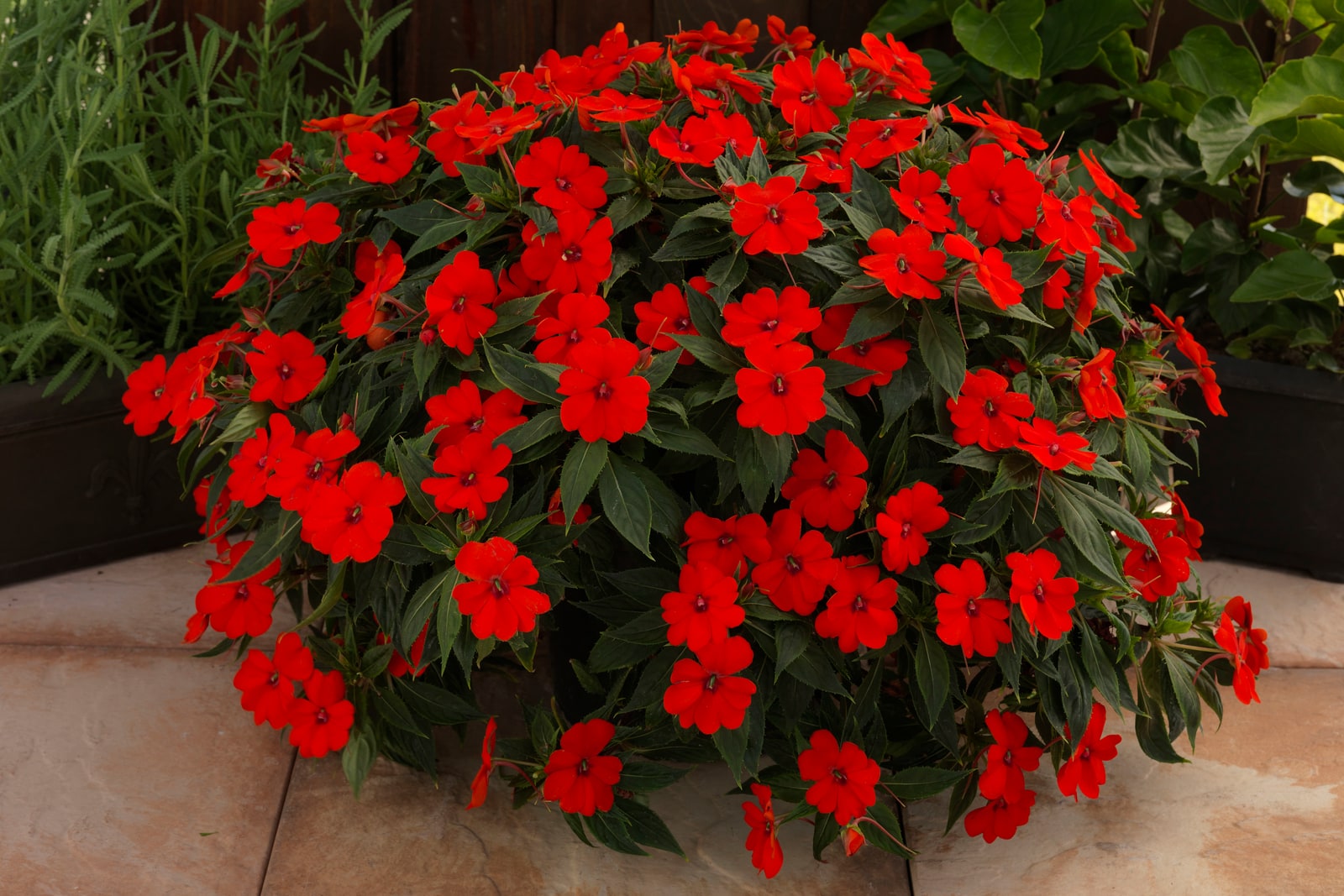
In the meantime, the plants do not know who owns the company. A SunPatiens from a liner that was rooted in Carleton will perform exactly the same in your yard next June, and that part of the story is still the one that matters most.
Hoosier Tip
If you care about this, the simplest thing you can do is keep buying from independent garden centers and asking who grew the plant. Those questions are the part of the supply chain no investor can consolidate.
Reference: Proven Winners press release, Oct. 7, 2025; Greenhouse Grower interview with Proven Winners leadership, Oct. 14, 2025; Garden Center magazine, Oct. 2025; GrowerTalks, Nov. 2025; Proven Winners 2027 ordering page; Proven Winners SVP marketing announcement, July 2026; Proven Harvest announcement, Feb. 2026; Emerald Coast Growers announcement, Sept. 30, 2026; Green Street Growth; Hoffmann / N.G. Heimos, Greenhouse Grower, Apr. 2025; Hoffmann / Smith Gardens, Greenhouse Grower, Jan. 2026; SiteOne Landscape Supply 10-K, fiscal 2025; BrightView 10-K, fiscal 2018; Markel / Costa Farms announcement, July 2017; Ball Horticultural Company; Silver Fern, Growers Buying Growers, Aug. 2026; Greenhouse Grower, consolidation overview, Aug. 2026.