 Behind the Scenes
Something New Is Coming to Garden Centers Next Spring
Owner, Schlegel Greenhouse · September 18, 2026
For the first time, Hoosier Boy will be growing a line of perennials in quart pots for local garden centers — and we’ve been pretty particular about what goes in it.
Why Quarts?
We like the idea of a perennial that doesn’t have to be a $25 purchase.
A quart gives you a young plant that’s ready to go into the garden without paying for someone else to grow it for another year in a big container.
Will it look as impressive sitting on the garden center bench next to a two-gallon perennial? Probably not. But you’re buying a perennial for what it’s going to become, not just what it looks like the afternoon you buy it.
Get it planted, take care of it while it establishes, and you’re giving it the chance to become a much larger plant in your garden. That lets us offer some interesting genetics while keeping the plants accessible.
We’re Being Conservative About Hardiness
This was one of the biggest decisions we made when choosing varieties.
The newest USDA map puts central Indiana primarily in Zones 6a and 6b, which means our recent average annual extreme minimum temperatures land in a warmer zone than older maps showed.
We’re not comfortable building a perennial program around that line. We’re targeting plants hardy to at least Zone 5.
Why? Because a hardiness zone isn’t a guarantee that your backyard will never get colder than the number on the map. USDA zones are based on average annual extreme minimum temperatures, and Purdue specifically cautions that colder winters can and will still occur.
And surviving winter isn’t determined by temperature alone.
- ✓ Drainage matters
- ✓ Snow cover matters
- ✓ Wind exposure matters
- ✓ Where the plant sits around your house matters
- ✓ How established it was before winter matters
- ✓ Freeze-thaw cycles matter
A Zone 6 perennial may perform perfectly well around Indianapolis for years. Plenty do. But if we’re putting the Hoosier Boy name on a perennial and selling it to someone who expects it to come back, we’d rather give ourselves some insurance. Zone 5 gives us that margin.
How We Pick a Variety
Rated Zone 5 or colder
↓
Genetics worth being excited about
↓
Finishes well in a quart
↓
Into the Hoosier Boy perennial line
A plant has to clear all four. Interesting but Zone 6 doesn’t make it.
We’re Not Looking for Boring Plants Either
Hardy doesn’t have to mean the same ten perennials you’ve seen for 30 years. We’re using this program as a chance to bring in some genuinely interesting newer breeding.
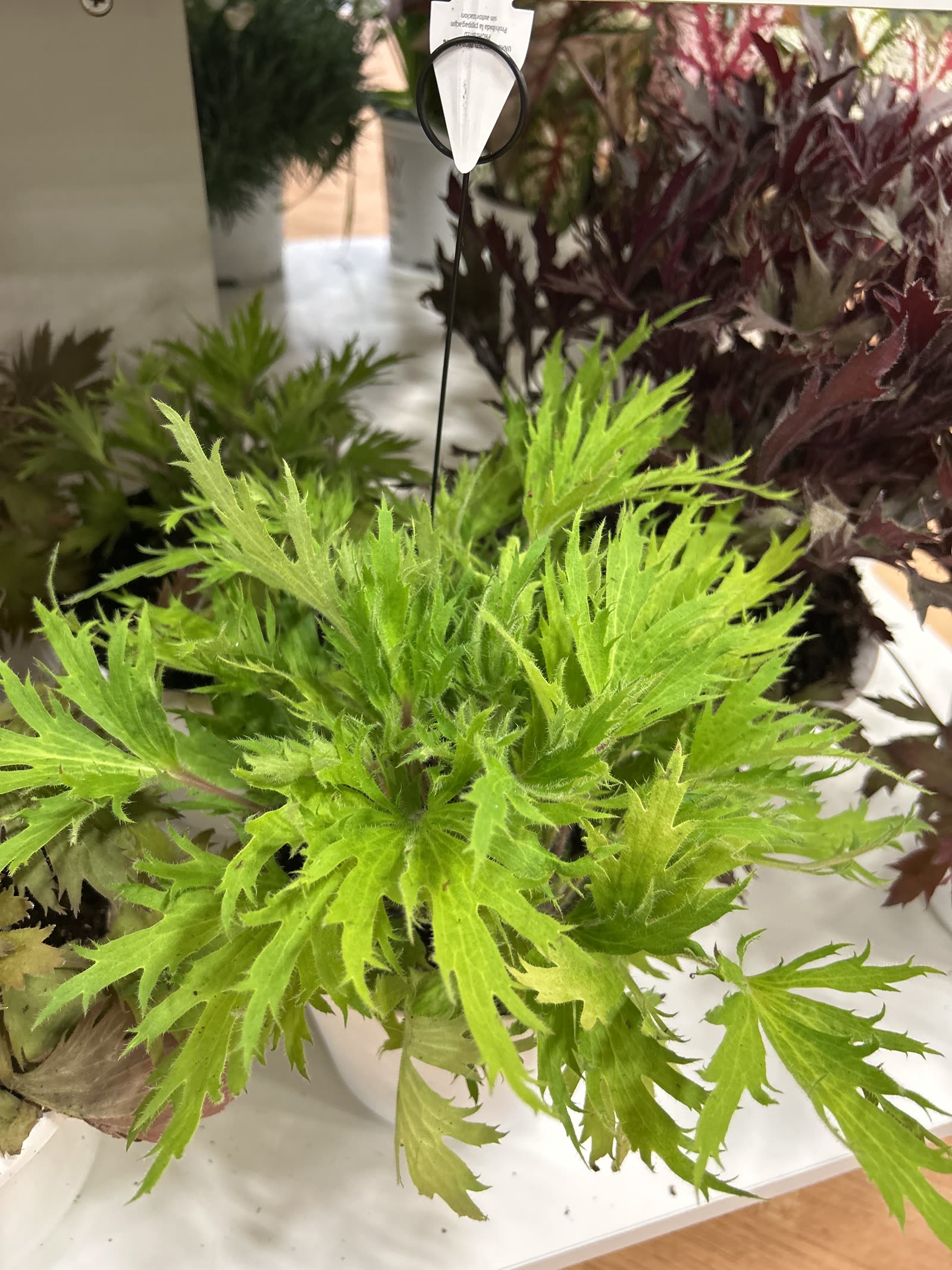
One I’m particularly excited about is Fyre Wing Heuchera from Terra Nova Nurseries.
We saw Fyre Wing at Cultivate this summer and it doesn’t really look like a normal Heuchera. Terra Nova describes it as the first lace-leaf Heuchera series. Instead of the relatively rounded leaves we’re used to on coral bells, Fyre Wing has deeply dissected foliage that looks more like a Japanese maple leaf. The series came out of an unusual breeding breakthrough that Terra Nova then spent years selecting and stabilizing.
And here’s the important part for our program: Fyre Wing is hardy down to Zone 4.
Terra Nova rates Fyre Wing ‘Hematite’ for Zones 4 through 9. It has deeply cut cordovan-red leaves with copper highlights, grows as a compact mound, and handles sun to part shade.
That’s exactly the type of plant we’re looking for. It’s new. It’s unusual. But we’re not asking you to gamble on whether it survives a normal Indiana winter.
We’ll show you a lot more of the varieties as we get closer to spring. For now: perennials, grown here, selected specifically with central Indiana gardens in mind.
Hoosier Tip
When you buy a quart perennial, plant it early in the season and water it like a new shrub for the first eight weeks, not like an established plant. Almost every perennial that fails to return in Indiana failed because it went into winter with a root system that never really left the pot.
Reference: USDA Plant Hardiness Zone Map · Purdue University Extension · Terra Nova Nurseries variety information · Schlegel Greenhouse production notes