 Plant Care
Poinsettias 101: They're Not Quite What You Think

Vice President & Owner, Schlegel Greenhouse · October 16, 2026
Every year around this time, our poinsettias begin doing something interesting. Plants that have spent most of their growing season producing green leaves start developing the reds, pinks, whites and other colors we associate with Christmas.
Most people know poinsettias as holiday decorations, but there’s quite a bit going on behind that color change. They’re tropical plants that respond to the length of the night, their red leaves aren’t actually flowers, and some of the most common advice about watering them isn’t particularly good.
A Poinsettia Is Actually a Euphorbia
The botanical name for a poinsettia is Euphorbia pulcherrima. It’s a species in the large genus Euphorbia, which includes everything from low-growing garden spurges to succulent plants that look remarkably like cacti.
Poinsettias are native to Mexico and Guatemala, where they grow as shrubs or small trees and can become much larger than the potted plants sold for the holidays.
The plants we grow commercially are selected cultivars of this species. Varieties such as Prestige have been bred for characteristics including branching, color, growth habit and how reliably they finish for the holiday season. We’re not growing a completely different kind of plant when we grow a Prestige poinsettia. We’re growing a cultivated variety of Euphorbia pulcherrima, selected to perform well in greenhouse production.
Those Red Leaves Aren’t Flowers
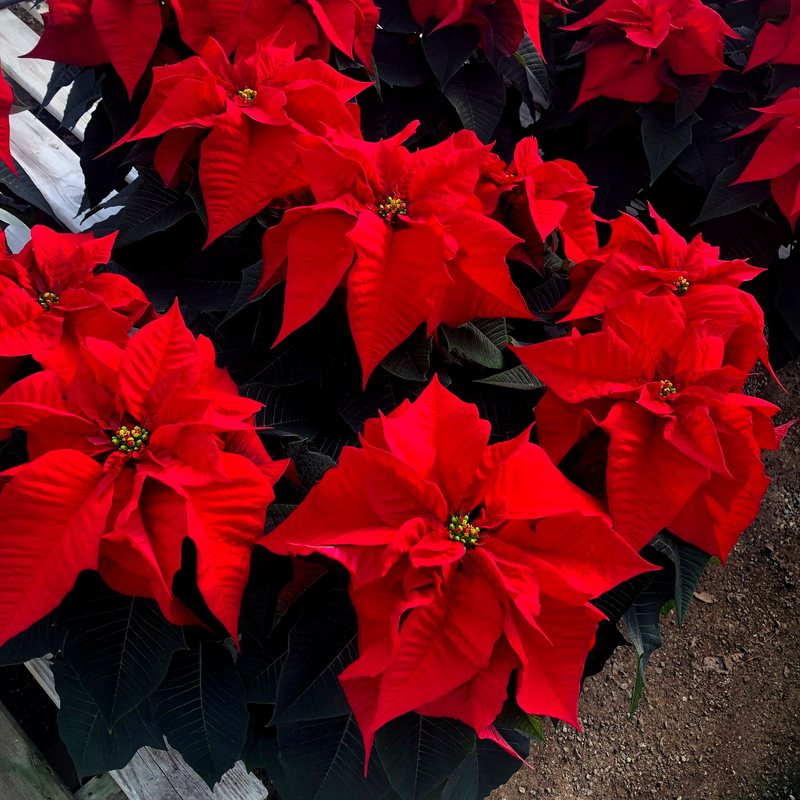
This is probably the most surprising thing about poinsettias. The large red parts that everyone calls flowers are actually modified leaves called bracts. The real flowers are the tiny yellow-green structures clustered in the center.
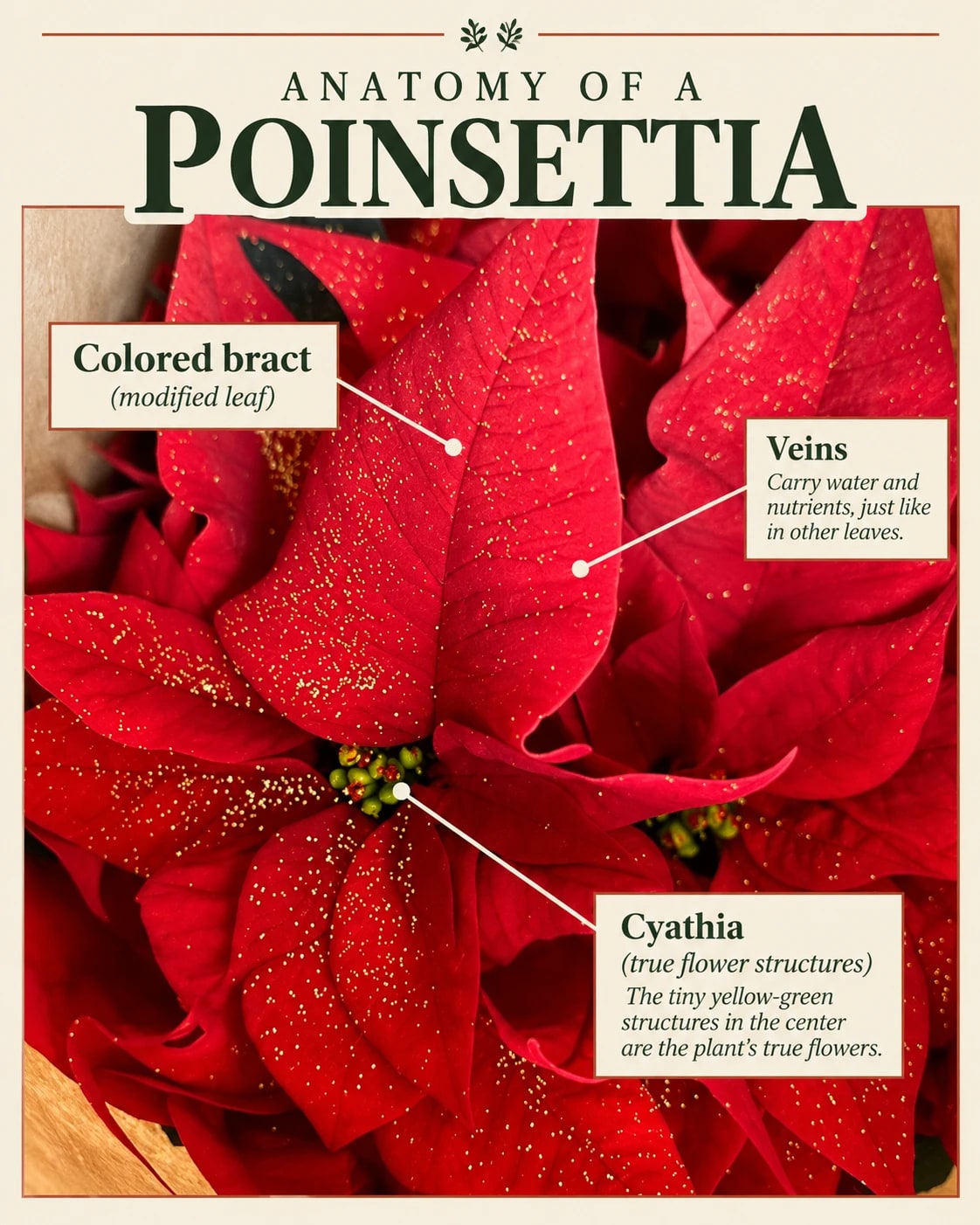
The parts of a poinsettia: colored bracts, their veins, and the cyathia at the center.
Those small central structures are the plant’s flower clusters, called cyathia. The colored bracts help draw pollinators to flowers that are otherwise easy to overlook. Breeders have spent decades developing varieties with larger, more colorful bracts and more reliable flowering.
Why Do Poinsettias Change Color in Winter?
Poinsettias are what growers call short-day plants, although it’s more accurate to say they’re long-night plants. As fall approaches and the nights get longer, the plant receives a signal to begin reproductive development. That process leads to flower formation and the development of colored bracts.
It isn’t cold weather turning the leaves red. In fact, poinsettias are sensitive to cold. It’s the length of the darkness.
This is one reason poinsettia production is so interesting. A greenhouse can have perfectly healthy plants, but if they’re exposed to unwanted light during the night at the wrong stage, flowering and bract color can be delayed. Even a relatively small amount of light from an exterior fixture can interfere with the process. That’s also why getting a poinsettia to color up again at home the following Christmas can be difficult: the plant needs consistently long, uninterrupted nights for weeks.
How to Water Your Poinsettia Properly
This is where I think most people get into trouble. Poinsettias like consistent moisture, but they don’t tolerate waterlogged roots. Keeping the pot constantly saturated can encourage root rot and eventually cause the plant to wilt, yellow or drop leaves.
My advice is to check the soil before watering. When the top inch is beginning to feel dry, it’s usually time. Then water thoroughly. Don’t give the plant a tiny splash every day. Apply enough water that the whole root ball becomes moist and you see the excess running out of the drainage holes, and then let it drain completely.
That last part matters because poinsettias are often sold in decorative foil sleeves or set inside containers without drainage. Water collects underneath the pot and the roots sit in it for days. If you’re using a decorative container, take the grower’s pot out to water it, or make sure the excess can escape.
And Please Don’t Use Ice Cubes
You may have heard advice about watering houseplants with ice cubes. I wouldn’t recommend it for poinsettias. They’re tropical plants with roots adapted to warm conditions, and ice cubes deliver water slowly and unevenly, which makes it hard to know whether you’ve actually moistened the whole root ball. Use room-temperature water, water thoroughly, let the excess drain, and don’t water again until the soil begins drying. There’s no reason to make it more complicated.
Where Should You Keep It?
A poinsettia does best in a bright spot, ideally near a window with plenty of indirect light. Indoor temperatures of 65 to 70°F are ideal. Keep the plant away from heating vents, fireplaces, exterior doors and cold window glass.
Be careful getting one home. A poinsettia that has spent months in a warm greenhouse can be damaged by a short exposure to cold Indiana weather, so keep it sleeved or covered between the garden center and the car.
Once it’s home, you don’t need to fertilize it to keep the bracts colorful through Christmas. The plant has already done most of its growing. Good watering, light and temperature matter much more.
Can You Keep One for Next Year?
You can. Poinsettias are perennial plants where they grow wild. But keeping one alive and getting it to look like a commercially grown Christmas poinsettia are two different things.
You can grow it as a houseplant, move it outside in warm weather, prune it to encourage branching, and bring it back in before nights turn cold. Getting it to produce colored bracts again takes careful control of its nighttime light in the fall. It’s a fun project if you enjoy experimenting with plants. Just don’t be surprised if your second-year poinsettia looks a little different from the one you brought home. And if you only want to enjoy it through the holidays, that’s perfectly fine too.
Hoosier Tip
The day you bring a poinsettia home, poke a few holes in the bottom of the foil sleeve or set the pot on a saucer instead. The foil holds water against the roots, and soggy roots are the fastest way to lose a poinsettia before Christmas.
More on plant care, every Friday
Three growing guides like this one and a short note from the greenhouse, free, once a week. Written for Indiana gardens.
Reference: University of Maryland Extension, Poinsettias; Purdue Extension, Reflowering Poinsettias; Purdue Extension, How to Care for Poinsettia; University of Minnesota Extension, Poinsettia; NC State Extension Plant Toolbox, Euphorbia pulcherrima; Schlegel Greenhouse production notes.