
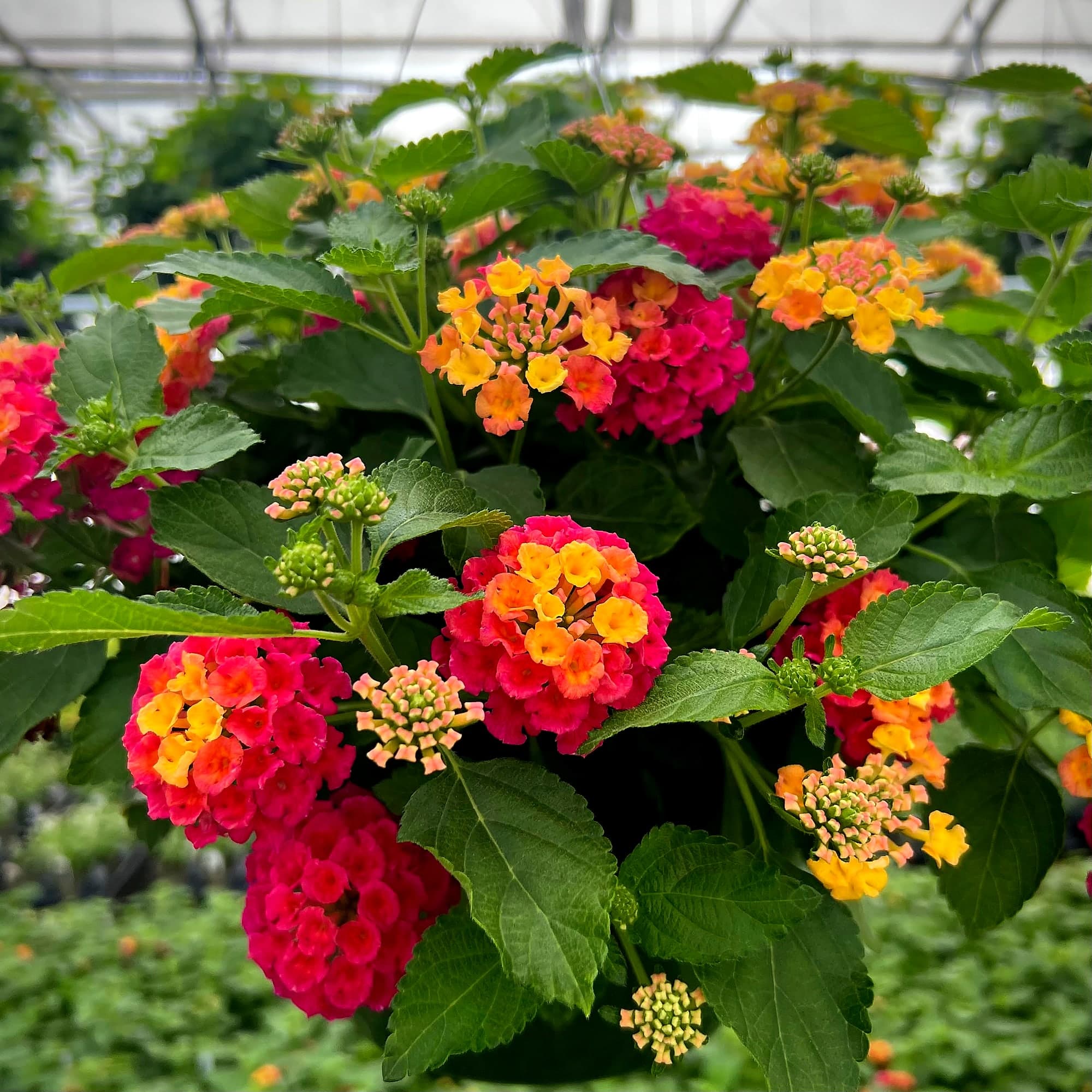
Shamrock™ Lantana
The Pollinator Powerhouse. Compact habit, electric color, and the most heat-tolerant genetics in the greenhouse. Built to thrive in the Indiana sun with sterile genetics that mean nonstop blooms from May through's hottest months.
Why Shamrock Changed Everything
The Lantana That Broke the Mold
For years, lantana had a reputation problem. Old-school varieties got woody and leggy by mid-summer. They produced berries that slowed bloom production. They looked great in May and exhausted by August.
Ball FloraPlant's breeders changed that with the Shamrock series — a compact, mounded lantana with sterile genetics. Because it can't produce seed or berries, it redirects all its energy into one thing: blooming. Nonstop. From May through hard frost.
The mounded habit stays tight and full instead of stretching and flopping. It's the perfect filler for a Fancy Boy container — and one of the most effective pollinator plants you can grow. Named a Texas Superstar for performance in extreme heat, and highlighted by the National Garden Bureau as a top-performing annual.
We grow Shamrock at Schlegel because it does something rare: it makes people look like expert gardeners with zero effort.
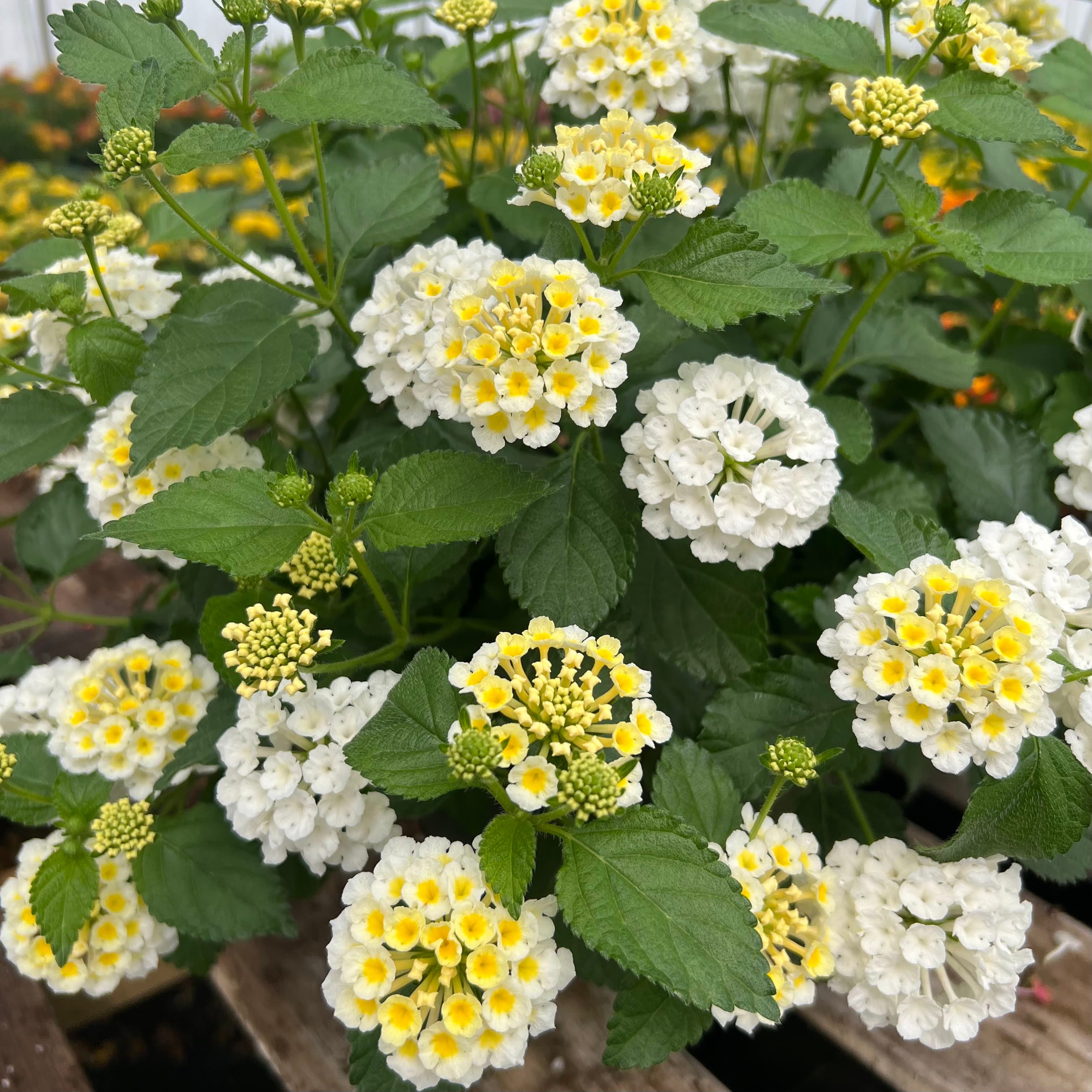
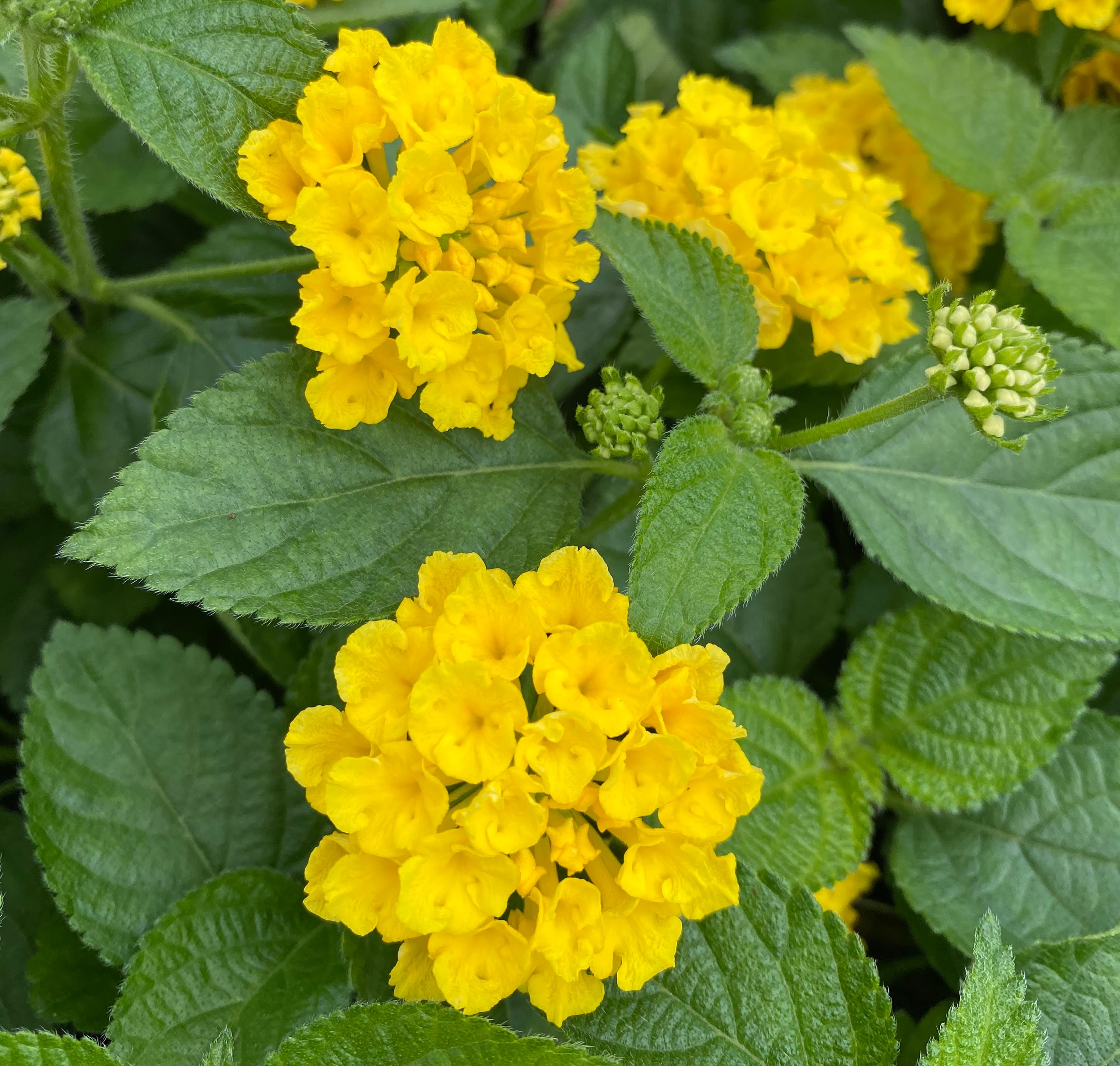
What Makes Them Different
Three Reasons to Grow Shamrock
Bigger color, tougher plants, longer season — without the fussy reputation lantana used to have.
Sterile Genetics
Because it can't produce seeds or berries, Shamrock redirects all its energy into continuous blooms. No deadheading. No berry cleanup. Just nonstop color from May through hard frost.
Heat & Drought Champion
Thrives in 90°+ Indiana summers. Actually increases bloom production as temperatures rise. In the ground, it handles drought better than most annuals. In containers, keep up with regular watering — dry pots mean spent blooms.
Butterfly Magnet
One of the most effective pollinator plants you can grow. Monarchs, swallowtails, and painted ladies are drawn to the nectar-rich flower clusters. Plant it in full sun and they'll find it.
The Lantana Evolution
Luscious vs. Shamrock
Two great lantanas. Different strengths. Here's how to choose.
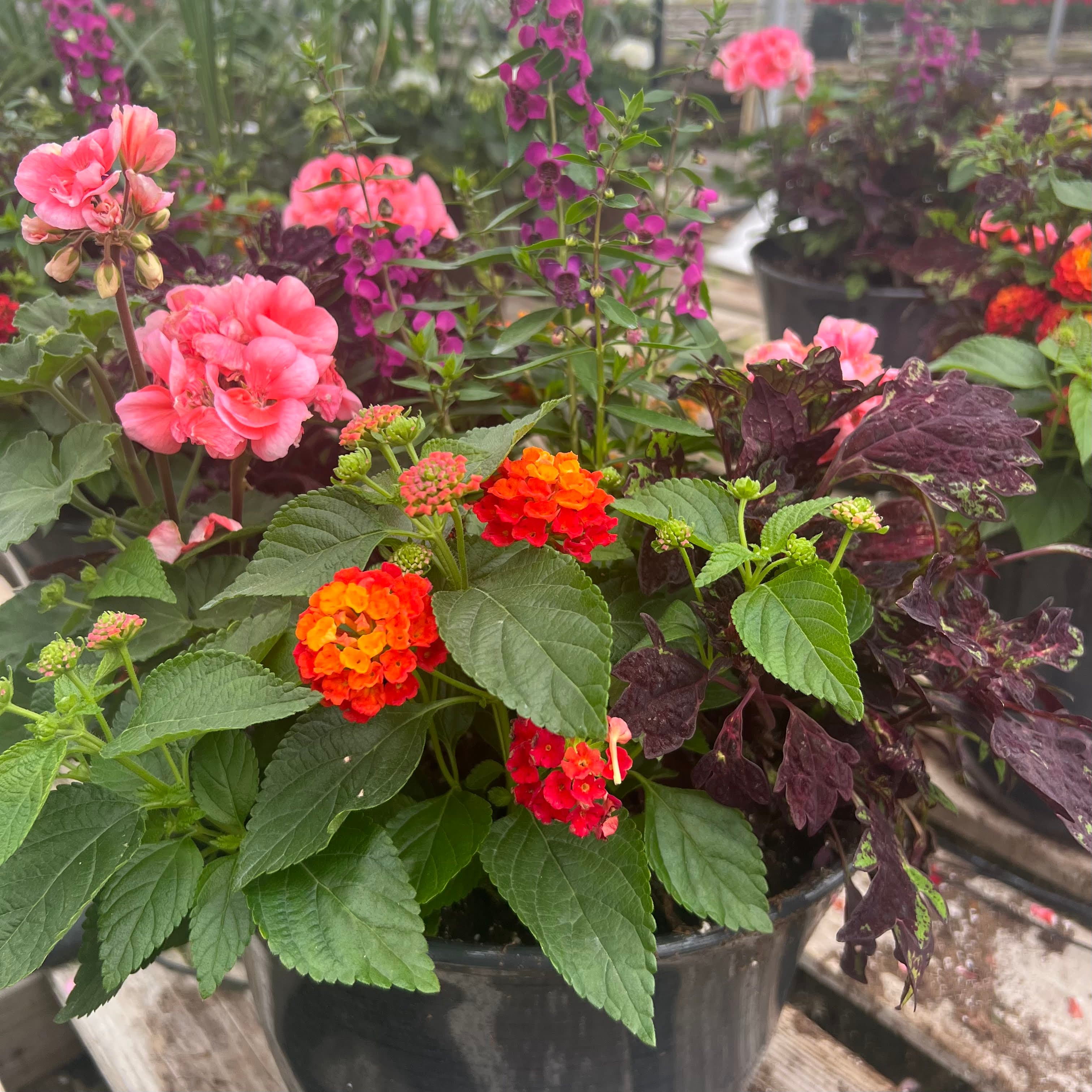
Big & Colorful
Luscious Lantana
Habit
Spreading, trailing — dramatic but sprawling. Can overtake other plants in a container.
Uniformity
Variable growth rates. Buy three and they won't always match.
Maintenance
Needs more pruning to stay in bounds. Gets 'entrepreneurial' by mid-summer.
Best For
Large combos, hanging baskets, gardeners who like a wilder look.
Next Generation
Shamrock™ Lantana
Habit
Tight, symmetrical, mounded. Stays where you put it — even in small pots.
Uniformity
Buy five and they'll match. Same height, same shape, same timing.
Maintenance
Self-cleaning, holds its shape all season. Less pruning, less chaos.
Best For
Front porches, entryways, formal containers, busy homeowners, new gardeners.
The Simple Way to Think About It
Shamrock = structured, clean, easy. Looks like you knew what you were doing.
Luscious = big, colorful, a little wild. Dramatic but needs more attention.
If you want something that looks great all summer without thinking about it — go Shamrock.
The Care Guide
How to Make Shamrock Thrive
The less you fuss, the better it performs — get these three right and Seriously.
Full Sun
6+ hours
Water Smart
Containers: regular · Ground: drought OK
Self-Cleaning
No deadheading
The Sun-Drenched Rule
You cannot over-sun this plant. 6-8 hours of direct light minimum. More sun = more blooms. South-facing, west-facing, reflected heat off concrete — that's where Shamrock thrives.
Water to Establish, Then Let It Work
In containers, water regularly — if the pot dries out, blooms get spent and you lose color. In the ground, lantana handles drought better than most annuals once established. The key: containers need consistent moisture, landscape beds can take more neglect.
The July Haircut
Shamrock doesn't need deadheading. But give it a light trim — about 1/3 off the top — in mid-July. You'll trigger a massive flush of new blooms for August and September. Like hitting a reset button.
Moderate Feeding
Balanced 20-20-20 every 2-3 weeks. Don't overfeed — lantana responds to sun more than fertilizer. If it's not blooming, it's a light problem, not a food problem.
Grower's Note — Caleb Schlegel
Shamrock is the one plant we tell people to stop worrying about. Full sun. Keep containers watered. Don't overthink it. The less you baby it, the better it performs. It's the closest thing to a bulletproof annual we grow — and the butterflies prove it every day.
Ready for a lantana that actually performs?
Find Shamrock at a local garden center this spring, or build a custom container with it in our designer.