 Perennials
Not All Rudbeckias Are Created Equal
Owner, Schlegel Greenhouse · July 9, 2026
Every yellow flower with a dark center gets called a Black-Eyed Susan. But today’s Rudbeckias have come a very long way.
The Rudbeckia Family
RUDBECKIA
├─ Perennial → Goldsturm — returns every year
└─ Annual & Tender → Toto · Denver Daisy · Sunbeckia · Echibeckia
For decades, breeders have been quietly reinventing this prairie native.
The result is one of the most diverse groups of summer flowers you can grow.
A perennial that returns for a decade. A compact annual for a window box. A premium landscape showstopper that blooms until frost.
There’s now a Rudbeckia for almost every garden. Here’s how they break down.
Goldsturm — The Classic
Picture a late-summer border glowing gold and buzzing with bees.
That’s Goldsturm.
It has stayed the gold standard for perennial Rudbeckia for one simple reason: it works.
- ✓ Returns every year in Indiana
- ✓ An excellent pollinator plant
- ✓ Extremely hardy and low-maintenance
- ✓ A beautiful, naturalized look
If you want one Rudbeckia still thriving ten years from now, this is probably it.
Toto — Small Plant, Big Impact
Not every garden needs a three-foot perennial.
Seed varieties like Toto pack all the charm of a Black-Eyed Susan into a tidy little package.
They’re perfect for borders, window boxes, patio pots, and small landscapes — flowering quickly and never overwhelming their neighbors.
Denver Daisy
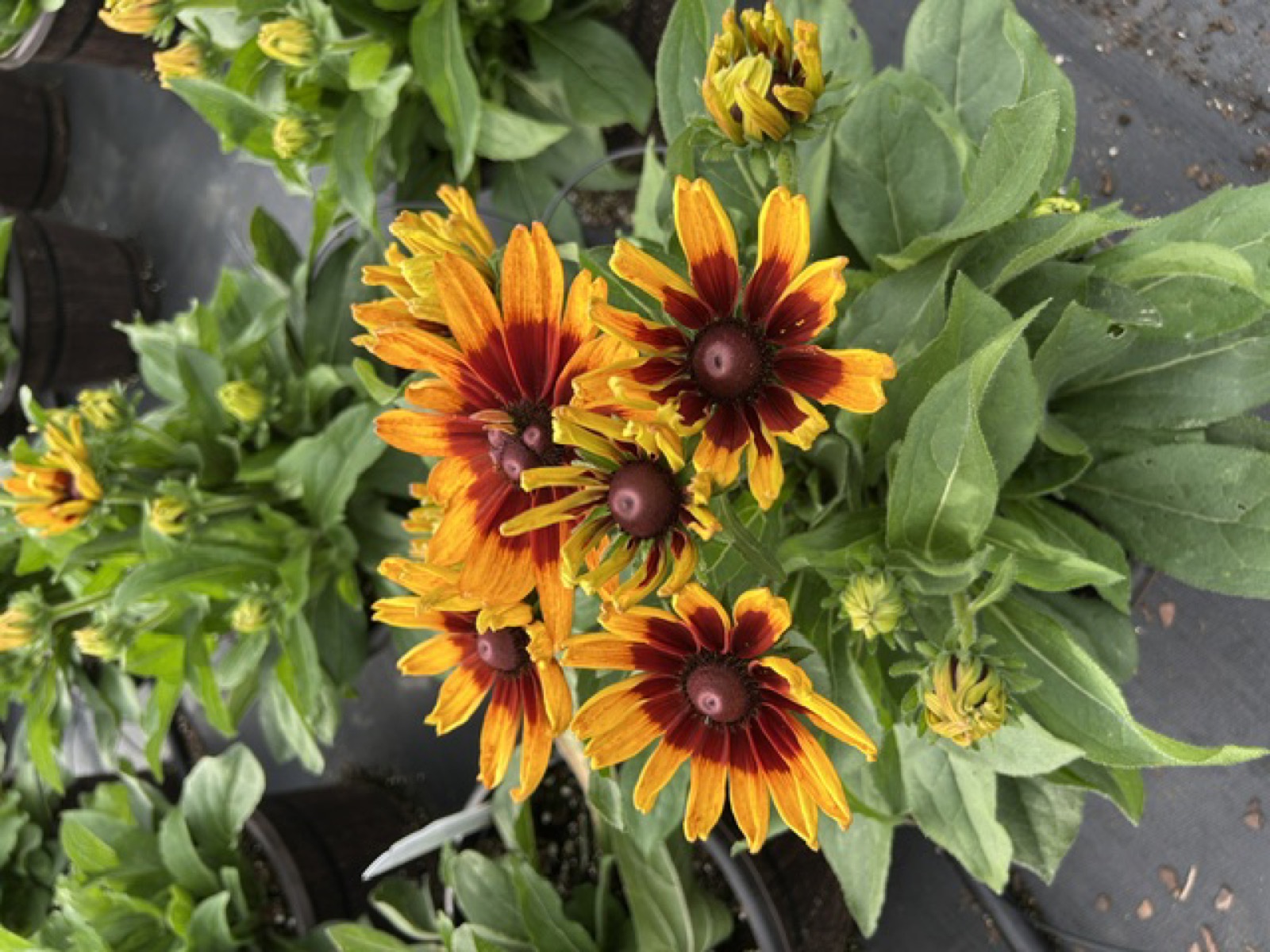
Denver Daisy changed what people expected from a Rudbeckia.
Large golden petals. A rich burgundy eye. Contrast you can spot from clear across the yard.
It’s bold, it’s colorful, and it bridges the gap between the traditional prairie types and modern breeding.
Sunbeckia — The Future of Rudbeckia
This is the one we’re most excited about.
Unlike seed-grown Rudbeckias, Sunbeckia is propagated from cuttings — so every plant is genetically identical and hand-selected for performance.
Against a traditional Rudbeckia, Sunbeckia brings:
- ✓ Larger flowers
- ✓ More vigorous growth and outstanding branching
- ✓ A longer bloom season
- ✓ Exceptional uniformity
In Indiana we grow it as an annual. Don’t let that stop you.
Few flowers deliver this much impact from July all the way to frost.
We’ll have Sunbeckias beginning in early August — and we think they’re going to be one of the standout plants of late summer.
Echibeckia
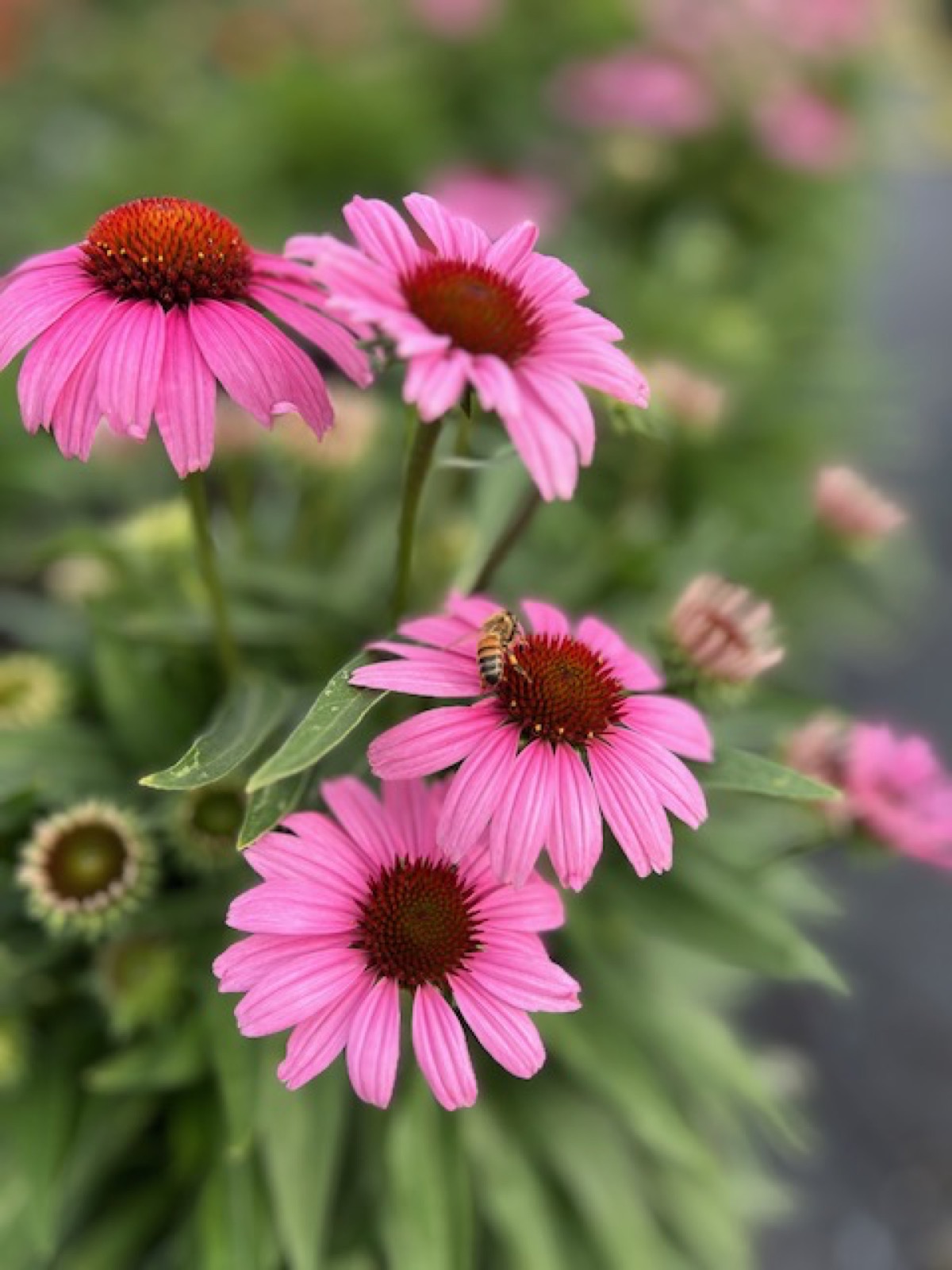
One of the newest breakthroughs crosses two garden favorites: Echinacea and Rudbeckia.
The result is Echibeckia.
Oversized flowers. Unusual colors. Serious vigor. Still new to most gardeners — and a glimpse of where ornamental breeding is headed.
The Ultimate Rudbeckia Guide
| Variety | Type | Best Use | What Makes It Special |
|---|---|---|---|
| Goldsturm | Perennial | Naturalized beds | Reliable, long-lived pollinator favorite |
| Toto | Annual | Borders & containers | Compact habit, early blooms |
| Denver Daisy | Annual | Statement beds | Large bicolor flowers |
| Sunbeckia | Annual (in Indiana) | Premium landscapes & pots | Massive flowers, blooms until frost |
| Echibeckia | Tender perennial | Specimen plant | Echinacea × Rudbeckia hybrid |
The Bottom Line
Black-Eyed Susans aren’t just one plant anymore.
A prairie-inspired perennial bed or the newest genetics on the market — today’s Rudbeckias give you more choices than ever.
Hoosier Tip
Match the plant to the job. Want it back next year? Plant Goldsturm. Want maximum flower power for one glorious season? A cutting-grown Sunbeckia will out-bloom anything started from seed.
More on perennials, every Friday
Three growing guides like this one and a short note from the greenhouse, free, once a week. Written for Indiana gardens.
Reference: Purdue University Extension · Schlegel Greenhouse production notes