 Indiana Growing
How Do Mums Know It's Time to Bloom?

Owner, Schlegel Greenhouse · July 31, 2026
Every fall we hear the same question — why are some mums blooming already while others are still completely green? — and the answer isn’t simply the weather.
It’s one of the most fascinating biological processes in horticulture. It’s called photoperiodism.
How Chrysanthemums Read the Calendar
Long summer days
↓
Nights grow longer
↓
Flower buds begin forming
↓
Fall color arrives
Plants Can Measure Night Length
Unlike us, plants don’t know what month it is. Instead, chrysanthemums use a light-sensitive pigment called phytochrome to detect the length of darkness each night. Once the nights become long enough, the plant gets the signal to start producing flower buds.
Because of this, mums are known as short-day plants — though many growers prefer to think of them as long-night plants, since it’s uninterrupted darkness that actually triggers flowering.
Why We Have Early, Mid, and Late Mums
This is where decades of plant breeding get interesting. Different varieties have been selected to respond to different night lengths. Some begin flowering earlier in August, others wait until September, and some keep going well into October.
That range lets growers offer beautiful mums across many weeks instead of having every variety bloom at exactly the same time — it’s one reason you’ll notice new colors appearing at garden centers throughout the fall.
Other Plants That Follow the Calendar
Chrysanthemums aren’t alone. Many familiar plants also rely on day length to decide when to flower:
- ✓ Poinsettias
- ✓ Christmas cactus
- ✓ Asters
- ✓ Some ornamental grasses
- ✓ Many agricultural crops, including soybeans
Nature developed an incredibly accurate seasonal clock. Plant breeders have simply learned how to work with it.
Our Mum Crop
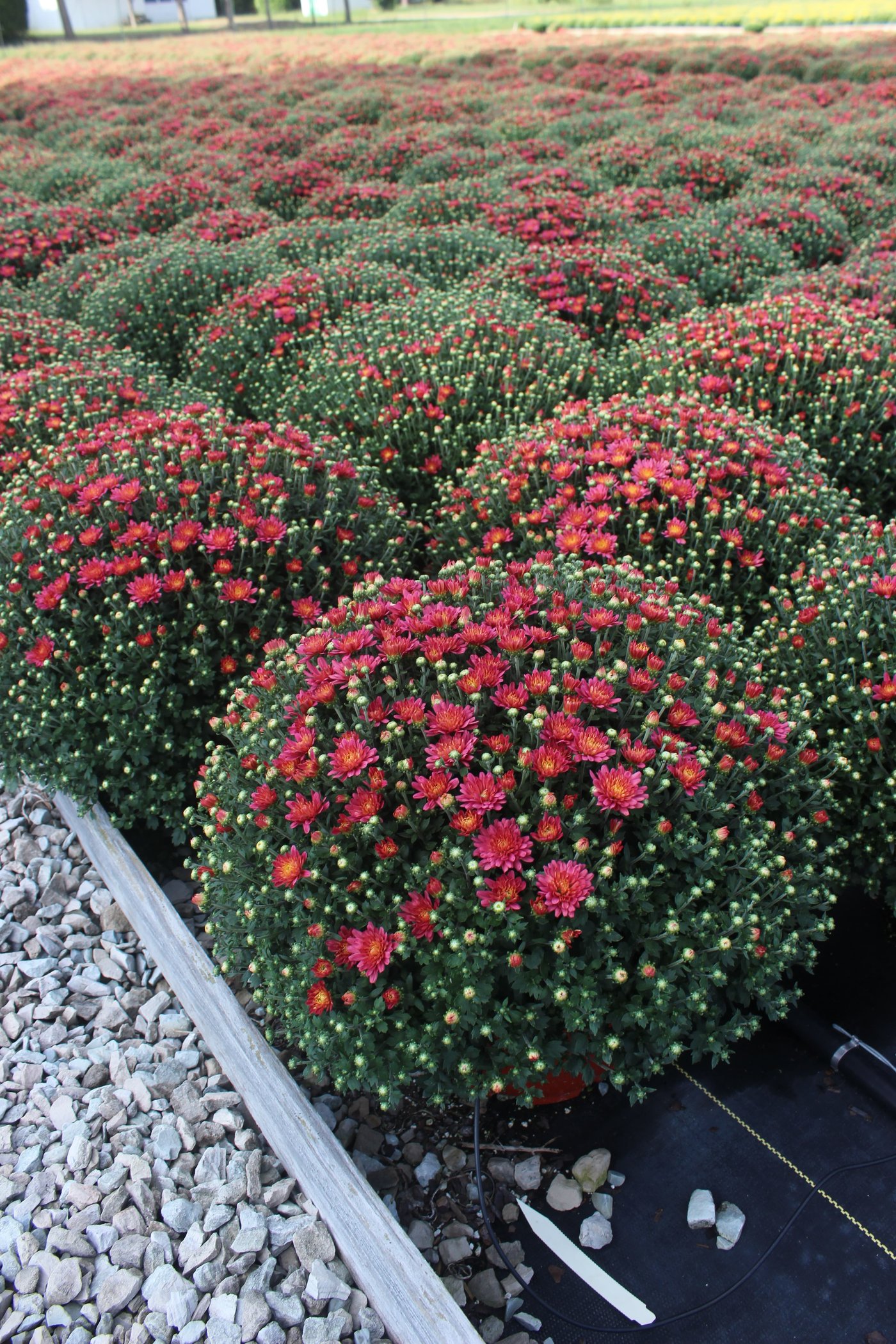
The mums are looking fantastic this year. We’ll begin offering our first early-season varieties in early August — something that would have seemed unusually early just a decade ago. Gardeners are decorating their porches earlier every year, and breeders have responded by developing varieties that bloom across a much wider window. As more varieties reach their flowering schedule, the selection will keep expanding through August and into fall.
Caleb’s Take
Walking through the mum fields this time of year is one of my favorite parts of the season. Even though many of the plants were started at nearly the same time, every variety has its own internal clock. Watching one section begin to color while another waits a few more weeks is a great reminder of just how remarkable plant breeding has become.
Hoosier Tip
If you want your porch mums to last, buy the ones showing the most tight buds and the least fully open color. A mum that’s already in full bloom on the shelf is further along its clock — the budded one will open in your pots and give you weeks more display.
More on indiana growing, every Friday
Three growing guides like this one and a short note from the greenhouse, free, once a week. Written for Indiana gardens.
Reference: Purdue University Extension · Schlegel Greenhouse production notes